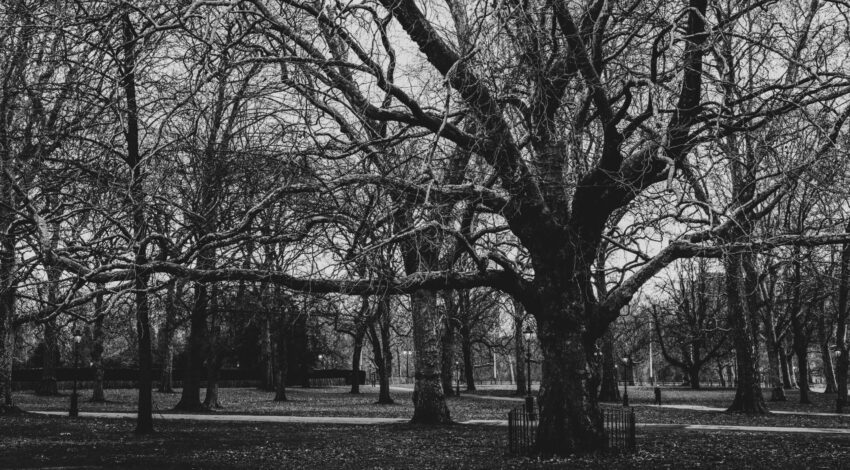
Green Park has a very particular atmosphere for a stretch of greenery situated in the very heart of tourist-heavy London. Even on the brightest summer days, one can sense an unusual stillness here – a feeling of suspension and a quiet sadness drifting among the shaded paths lined with twisted, ancient trees. The long, mist-shrouded…
Plague’s Wrath: How the 1665 Epidemic Turned London into a City of Dead
The Great Plague of 1665 was preceded by unsettling portents that lent it a mysterious, almost otherworldly character. In December 1664, a comet appeared in the night sky, deemed profoundly ominous by scholars and astrologers alike. The conjunction of Mars and Saturn in November was interpreted as a harbinger of war, pestilence, and famine. The…
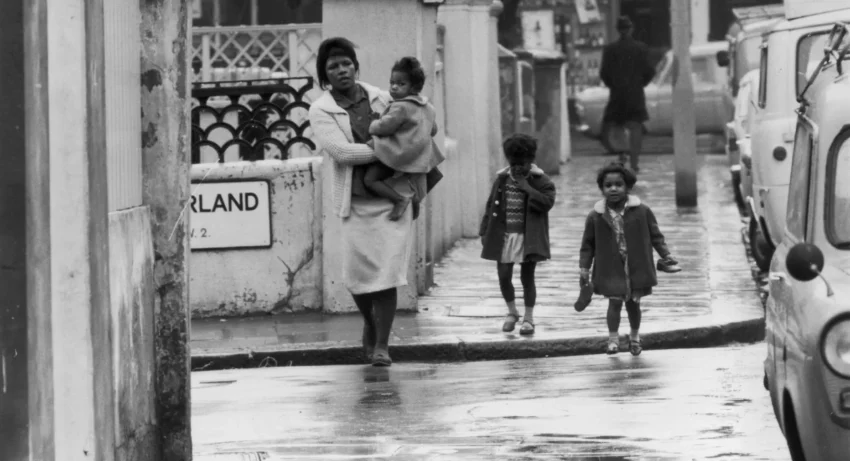
Racism, Rachmanism and Riots: Notting Hill’s Post-War Crisis
A late Victorian enclave for the well-to-do middle classes, Notting Hill began to crumble in the wake of the First World War. Over the following decades, the area would become known across London for the exploitative subletting practice later known as Rachmanism. With the arrival of the new century and the shortages brought by war,…
Inside Charlton House – A Tale of Spirits, Secret Notes, and a Stolen Heiress.
Sir Adam Newton, the first owner of Charlton House, was an undeniably ambitious man: swift rise at court, well-placed connections, and a remarkable gift for turning royal proximity into privilege. His marked talents allowed him to secure positions that other sons of ordinary Scottish bakers could only dream of. A False Priest, a Royal Tutor…
Prostitution and the Bleak Lives of Women in Victorian London
Nineteenth-century London, the proud heart of a vast British Empire, had become a political, cultural, and financial capital admired across the world. Queen Victoria ascended the throne in 1837 and remained there for the next sixty-four years. Her dignity, decorum, and strict moral standards shaped English society, which tried to follow her puritanical way of…
Operating Theatre Secrets: The Shocking Medical Past of St Thomas’ Church
Completed in 1703, St Thomas’ Church is a most unusual – and yet almost entirely forgotten – part of London, home to the Georgian operating theatre hidden in its attic. It sits awkwardly pressed between a row of tight terraced houses and a sperm bank, dwarfed on one side by the glass bulk of the…
Disease of the Water: Victorian Soho in the Clutches of Cholera
The history of Soho is marked by stark contrasts. Before cholera and poverty left their indelible mark on the district, the area had already undergone a long and turbulent transformation. In the seventeenth century it was an enclave of aristocracy on the city’s fringes, home to more than a hundred noble families living in luxury…
Notting Hill’s Crooked Mirror: Avernus and the Grim History of Notting Dale Slums
When you wander the streets of Notting Hill, the very first thing that strikes you is the sudden shift in architecture west of Walmer Road. The pastel-coloured, well-kept nineteenth-century houses suddenly give way to bleak, bare-brick tenements and clusters of grey, battered tower blocks. Every building looks exactly the same. Dull brickwork, plain walls, no…
The Cursed Obelisk: Shadows Beneath Cleopatra’s Needle
Cleopatra’s Needle is an ancient red granite obelisk that now stands on the Thames Embankment, near Waterloo Bridge. Though its presence beneath London’s clouded skies seems somewhat unexpected, it is not the only Egyptian obelisk to have found its way, quite improbably, to the other side of the world. Monuments of this kind were usually…
London’s Witches: Tales of Magic and Murder
Beneath the gloomy skies of mediaeval London, the line between superstition and heresy was dangerously blurred. Here, amid the stench of the Thames and the cries of the condemned, witches were hunted, tried, and executed – their supposed crimes etched into the city’s collective memory. Yet behind every accusation lay something darker still: envy, greed,…