
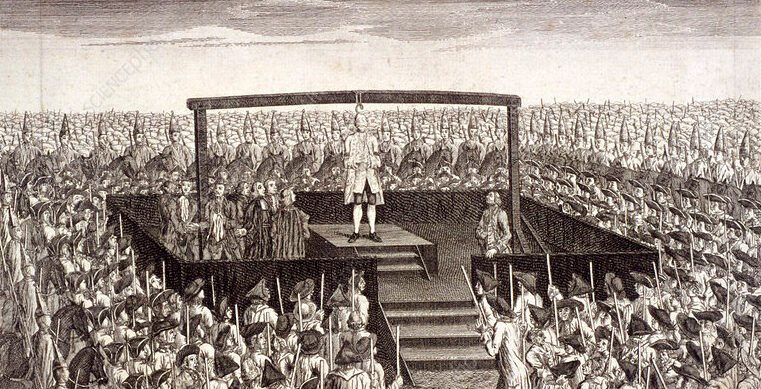
Executions are among the darkest chapters in London’s history. For more than seven centuries, public death shaped the lives of thousands of people across the capital. The condemned were only part of the story. Families, friends, judges, executioners and the crowds who came to watch were all drawn into the spectacle. Executions became part of London’s landscape. They filled newspaper columns, dominated public conversation and were discussed in aristocratic drawing rooms as readily as they were in taverns.
Henry Machyn, a London diarist who chronicled life in the city between 1550 and 1563, recorded witnessing as many as three executions in a single day. In just one month of 1557, he watched eight prisoners hanged at Tyburn, three men and two women burned at the stake in Smithfield, and seven pirates executed at Wapping. His fascination with these scenes was far from unusual. Many Londoners regarded public executions as entertainment, little different from visiting the theatre, attending an annual fair or watching a bare-knuckle prize fight.
The crimes punishable by death changed over the centuries, and so did the methods of execution. Both evolved alongside wider social and economic change. The purpose, however, remained much the same. Every execution was intended to serve as a warning to those still alive.
When Death Became the Law
The first executions in London probably took place during the Roman occupation, although the earliest official record of public capital punishment in the city dates only from the twelfth century. During the seventh century, executions of men were relatively uncommon. Every able-bodied male was regarded as a potential defender of the kingdom, making the authorities reluctant to deprive themselves of future soldiers. Women received far less protection. Theft alone could result in a sentence of death, most commonly carried out by drowning. The same method was also frequently used against women accused of witchcraft.
By the tenth century, fines for lesser offences gradually gave way to punishments based on physical violence, which were considered a more effective deterrent. Whipping and mutilation became increasingly common. Executions, usually by drowning or stoning, remained comparatively rare and were reserved for the most serious offenders.
Until the end of the eleventh century, capital punishment was still used sparingly. During the reign of William I (1066–1087), blinding and castration were among the preferred forms of punishment. Under Henry II (1154–1189), offenders were more commonly sentenced to the amputation of a hand or foot. None of these procedures involved any form of anaesthetic.
The Law of Treason
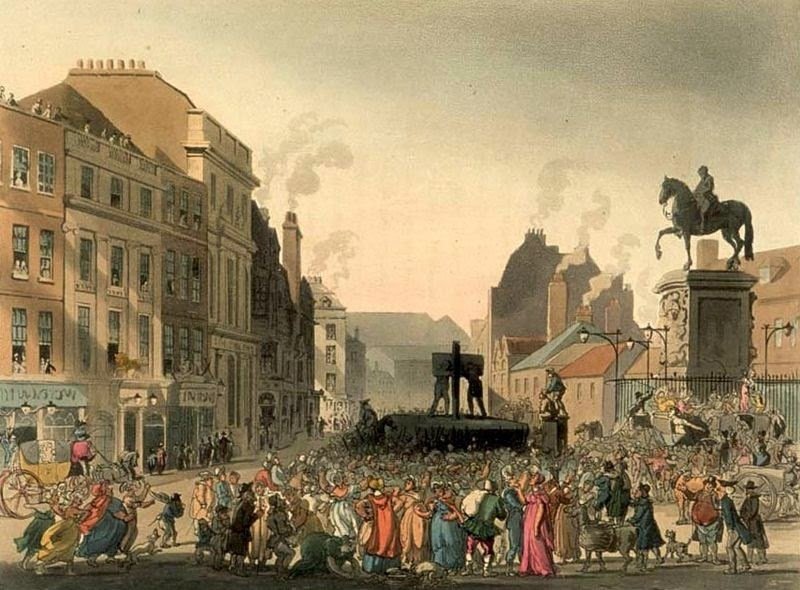
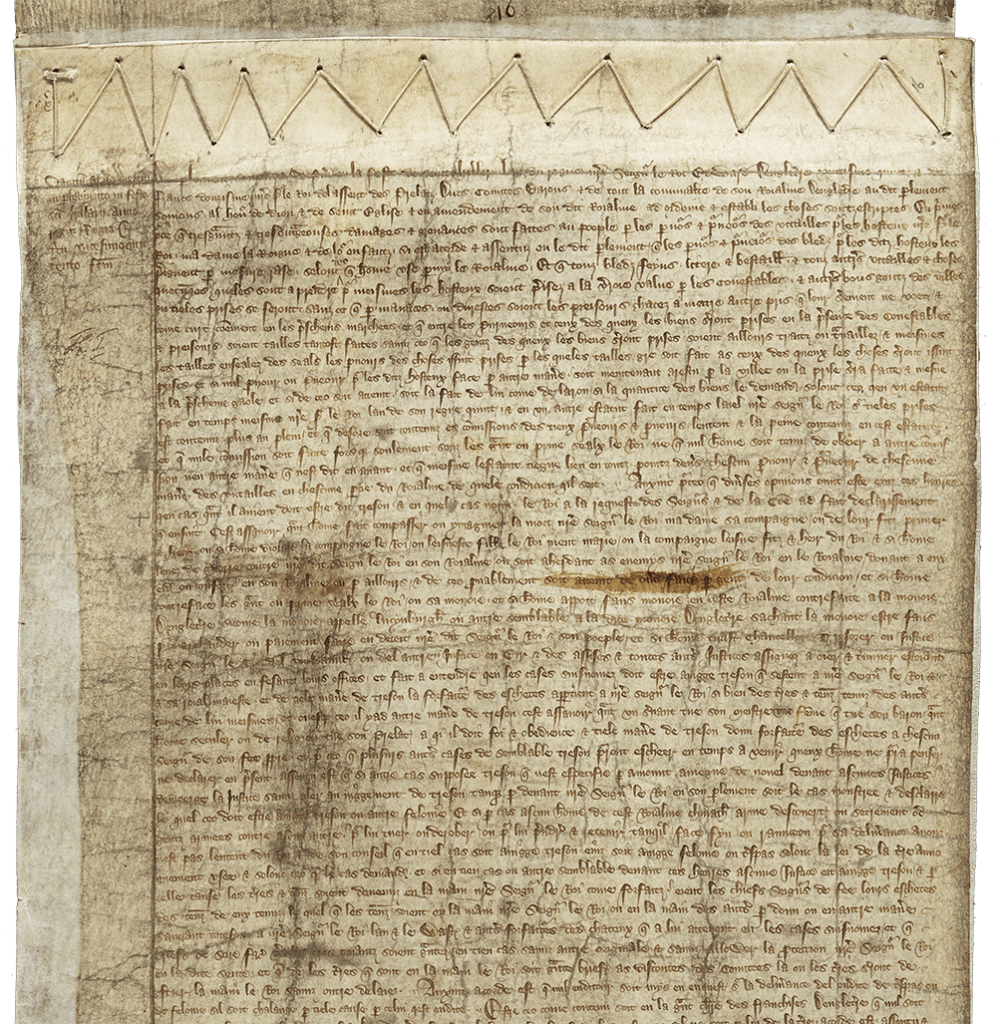
During the reign of Henry II, English law was codified for the first time. The Treason Act of 1352 introduced the death penalty for high treason against the Crown, as well as the lesser offence of petty treason. The latter covered the murder of a social superior. It included, among others, wives who killed their husbands and servants who murdered their masters.
Men convicted of high treason were sentenced to be drawn, hanged and quartered. Women guilty of the same offence were drawn to the place of execution before being burned at the stake. Those convicted of petty treason faced slightly different punishments. Men were drawn and hanged, while women were burned alive.
From the twelfth century onwards, capital punishment was also imposed for a range of other offences, including arson, heresy, counterfeiting and murder.
The Bloody Code
By the late seventeenth century, the number of offences carrying a mandatory death sentence had risen dramatically. In 1688, around fifty crimes were punishable by death. By the end of the century, the number had exceeded two hundred. Therefore, the period between 1688 and 1823 became known as the Bloody Code due to the vast number of offences punishable by death and the resulting rise in executions across Britain. Meaningful reform did not arrive until 1823, when Parliament passed an Act allowing judges to impose lesser sentences where mitigating circumstances existed.
Between 1718 and 1775, at least 30,000 convicted criminals were also deported from Britain. Those sentenced to transportation were sent to colonies in the Americas, where they provided the labour needed to support further economic expansion.
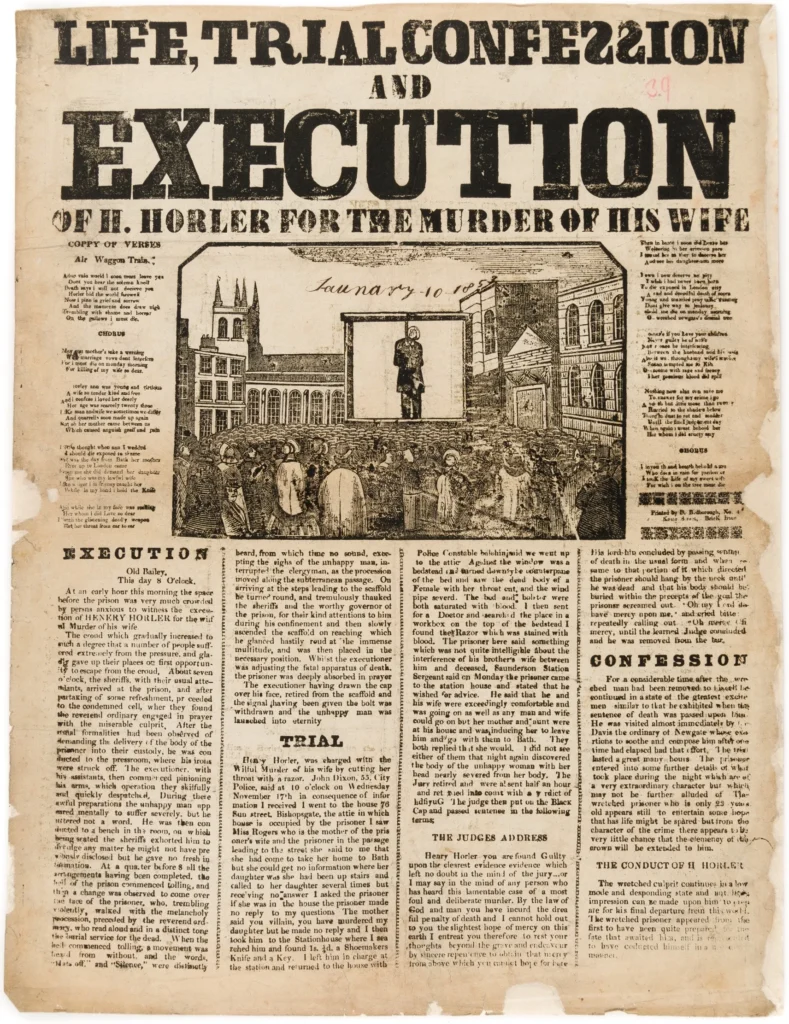
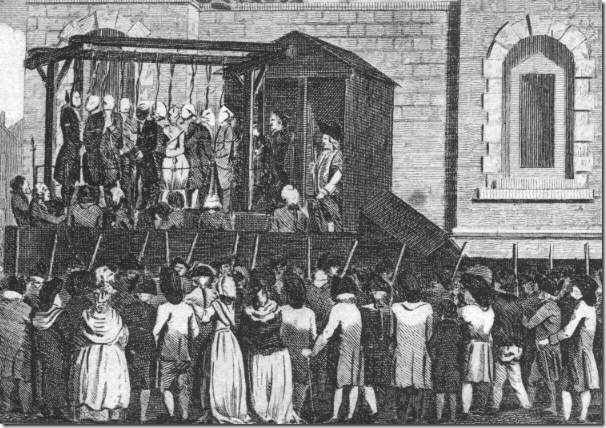
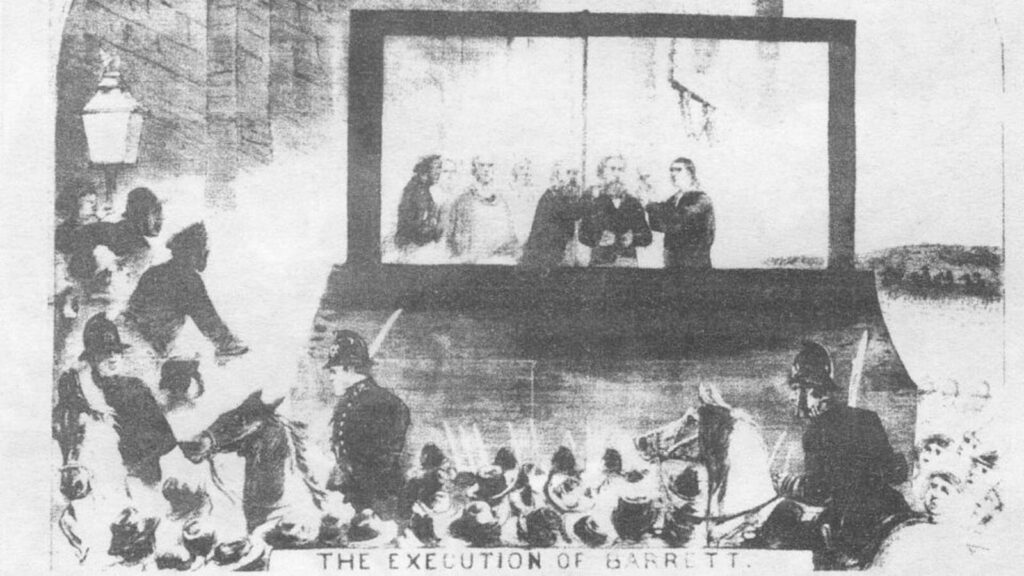
By the eighteenth century, hanging had become the most common method of execution. Michael Barrett, executed in 1868, was the last person to be publicly hanged in Britain. Although capital punishment remained in use until 1964, executions thereafter took place behind prison walls, beyond the gaze of London’s crowds.
Behind Prison Walls
When Queen Victoria came to the throne in 1837, around thirty seven offences were still punishable by hanging. By the end of her reign, that number had fallen to just four. They included murder, treason, piracy with violence, and arson in royal dockyards. This decline was closely linked to improving public safety on London’s streets, much of it brought about by the work of the newly established Metropolitan Police.
Following the abolition of public executions in 1868, all death sentences were carried out inside prisons before a strictly limited number of witnesses. In July 1955, twenty-eight-year-old Ruth Ellis became the last woman to be hanged in Britain after being convicted of murder at Holloway Prison.
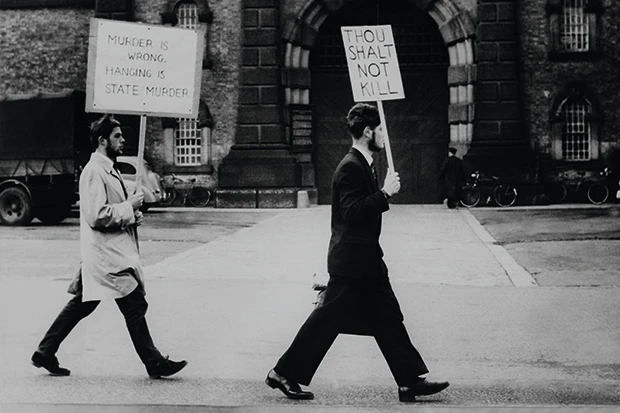
The final execution in London took place in September 1961 at Wandsworth Prison. Hendrick Neimasz, a forty-nine-year-old convicted murderer, was hanged there. Capital punishment for murder was abolished in 1965. In 1998, the death penalty was finally removed for the last two remaining capital offences: violent piracy and high treason. With that, a practice that had endured in Britain for more than seven centuries at last came to an end.
A Traitor’s Fate: Drawn, Hanged and Quartered
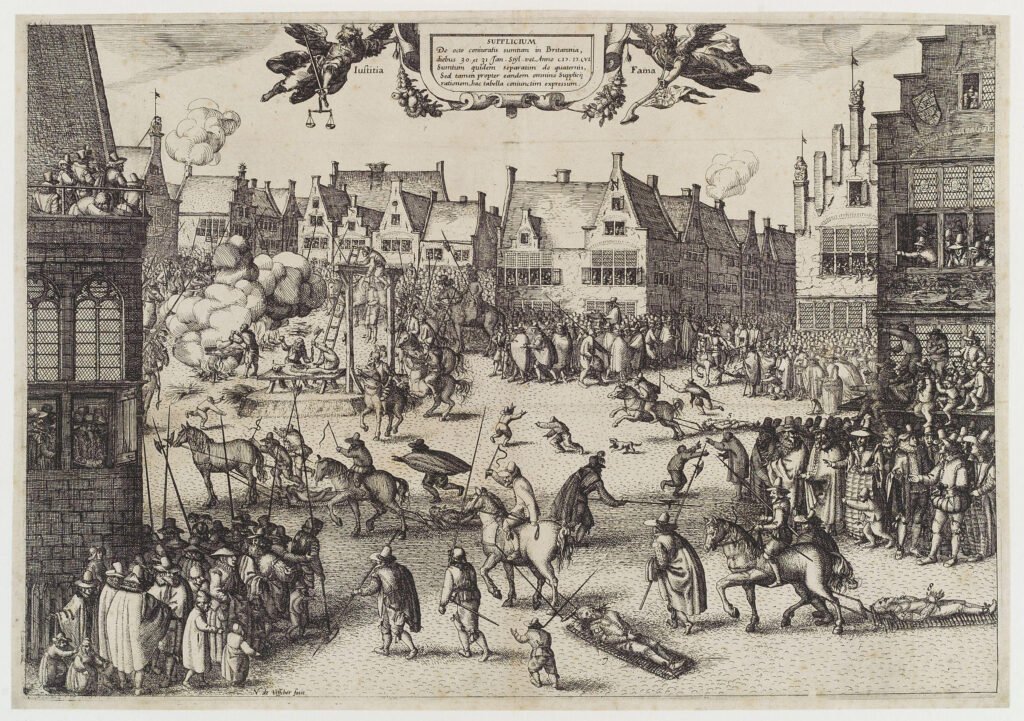
This brutal method of execution was first used in England in 1242 against William de Marisco, who had conspired against King Henry III. The punishment was reserved exclusively for traitors who sought to harm the Crown, provoke war, or undermine the authority of the monarch. The brutality of the punishment was intended to reflect the gravity of the crime and to serve as a stark warning to anyone contemplating treason.
Originally, condemned prisoners were dragged behind horses over bare ground on their way to the place of execution. Once it became clear that the ordeal could kill them before they even reached the scaffold, the practice was modified. The condemned were instead transported on crude wooden or wicker hurdles. Upon arrival, the prisoner was hanged until unconscious, but not until death. The execution then continued with castration, evisceration and the dismemberment of the body.
Among those who suffered this punishment was William Wallace, remembered as Braveheart, as well as the conspirators behind the 1605 Gunpowder Plot, who attempted to blow up the English Parliament. Guy Fawkes escaped the most agonising part of his sentence by leaping from the cart with the noose already around his neck, breaking it instantly.
A Privileged Death: Beheading at the Tower
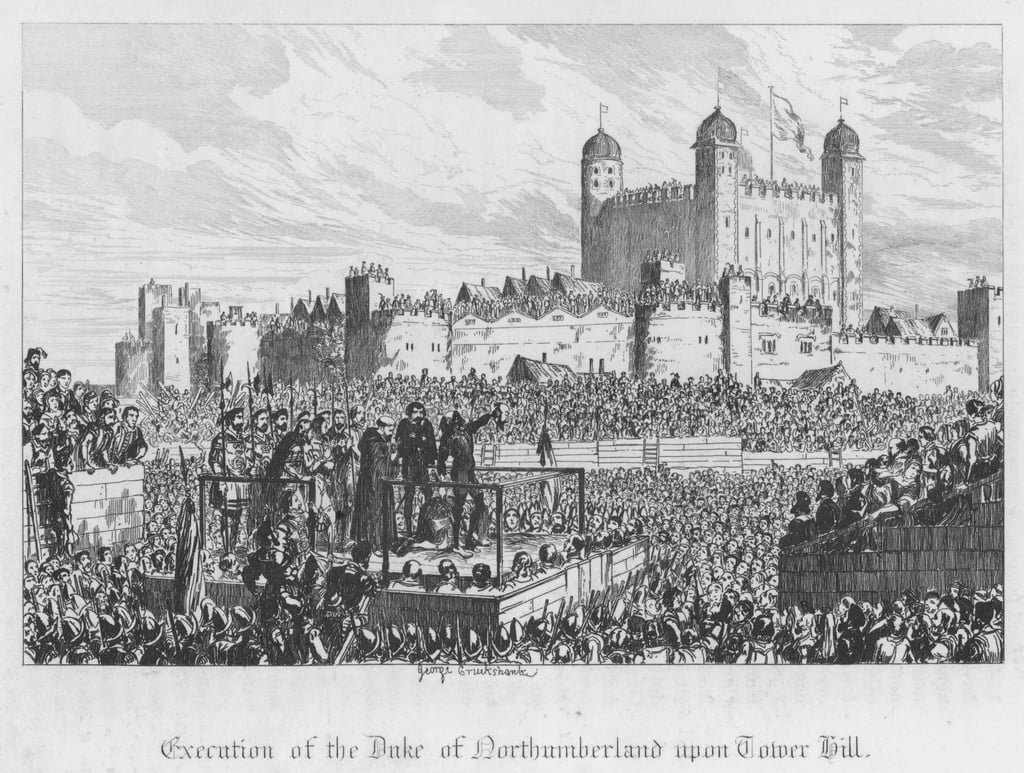
Members of the upper classes convicted of treason were usually granted the comparatively merciful death of beheading. Their social status spared them the prolonged agony of quartering or burning at the stake.
From the fourteenth century until the middle of the eighteenth, the vast majority of public beheadings took place on Tower Hill, beside the Tower of London. A small number were carried out privately within the Tower itself, away from public view. Among those executed there were two of Henry VIII’s wives, Anne Boleyn and Catherine Howard.
Beheadings were normally carried out by the city executioner using an axe, although there are recorded cases in which a sword or even a knife was used instead. Anne Boleyn, condemned for treason and adultery in 1536, requested that her execution be performed by a renowned French swordsman, who travelled from Calais specifically for the occasion.
The execution of James Scott, Duke of Monmouth, proved considerably less skilful. After five unsuccessful blows with the axe failed to sever his head, the executioner was forced to finish the task with a simple knife.
The French Jacobite rebel Lord Simon Fraser became the last person to be publicly beheaded on Tower Hill in 1747. The eighty-year-old supporter of the 1745 uprising against King George II was also the last person in England to be beheaded while still fully conscious. Those convicted of treason after him were first hanged until dead before being beheaded posthumously. The final beheading in Britain took place in 1820, although the punishment itself was not formally abolished until 1973.
Purified by Fire: Burning at the Stake
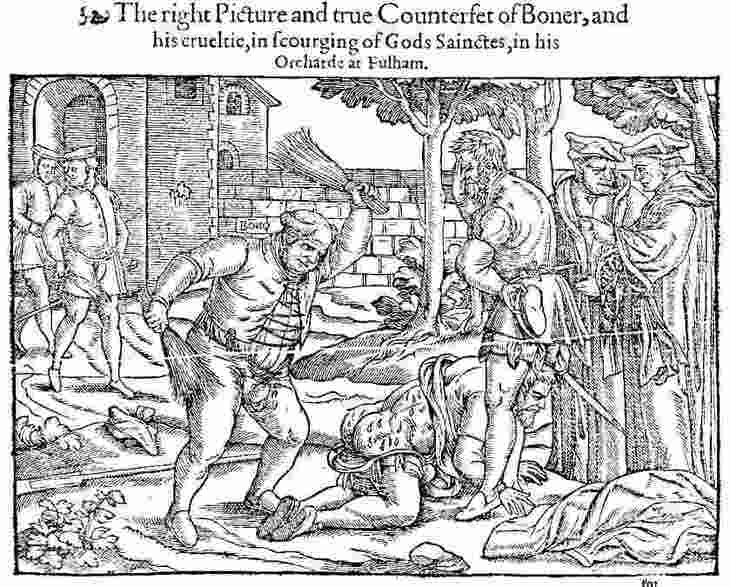
During the Middle Ages, burning at the stake was used primarily for those convicted of arson and, from the fifteenth century onwards, for heresy. Women convicted of treason, murder or counterfeiting were also commonly sentenced to this punishment, as other methods of execution, such as drawing and quartering, risked exposing the naked body, something considered deeply indecent at the time.
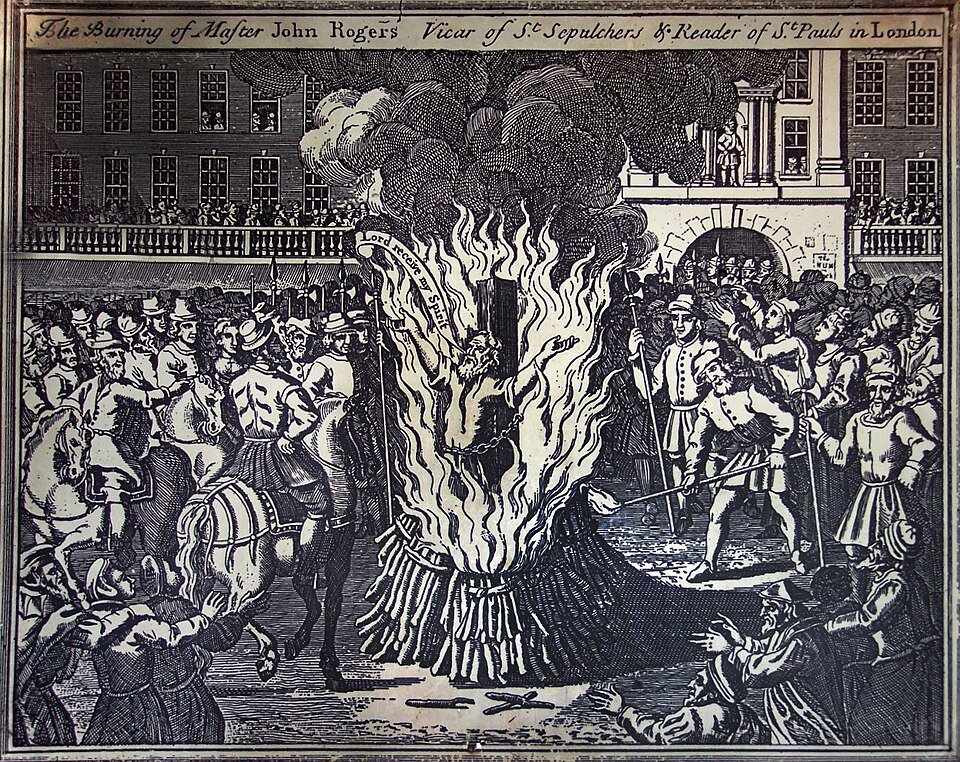
In 1401, William Sawtrey, a member of the Lollard movement, became the first person in England to be burned at the stake for his religious beliefs. The Lollards opposed corruption within the clergy and the celibacy of priests while advocating the confiscation of Church property. They are often regarded as forerunners of the English Protestant movement.
The sixteenth century saw burning at the stake become particularly common. In 1534, Henry VIII broke with the Roman Catholic Church and declared himself Supreme Head of the Church of England. During the English Reformation, many Catholic “heretics” who refused to embrace the new faith were condemned to the flames.
The situation was reversed during the reign of Henry’s daughter, Queen Mary I, who sought to restore Catholicism to England at any cost. Protestant “heretics” now took the place of their Catholic predecessors. Mary ordered the execution of more than 280 supporters of the Reformation, earning her the enduring nickname Bloody Mary. The most notorious site for these executions was Smithfield, the open square beside London’s historic meat market, which still exists today.
The last person sentenced to be burned at the stake was Catherine Murphy, convicted alongside her husband for counterfeiting in 1789. By then, however, burning people alive had already been abolished. Murphy was first hanged, and only then was her body committed to the flames.
The People’s Execution: Death by Hanging
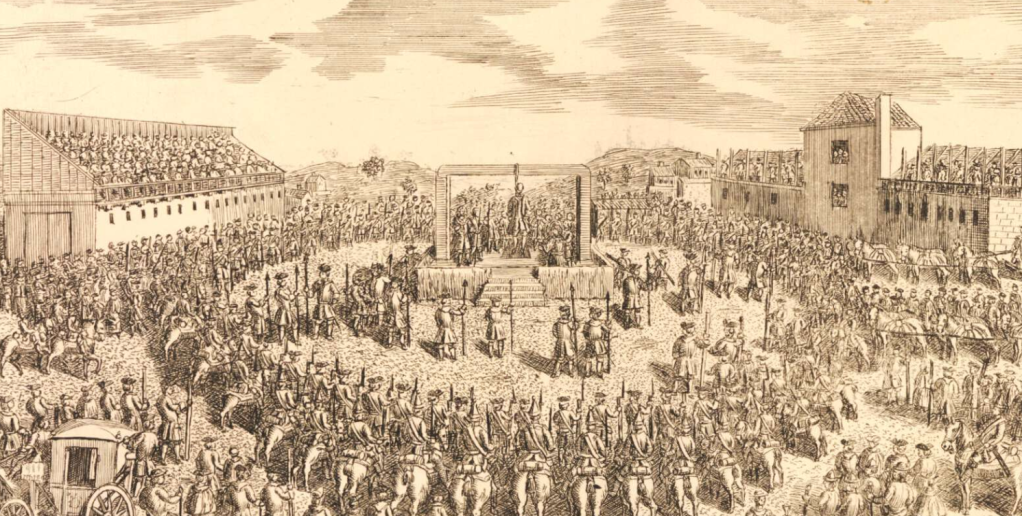
For centuries, hanging was by far the most common form of execution and was used for a wide range of offences.
In the earliest recorded executions in London, the gallows consisted of little more than a roadside tree and an open cart. The condemned stood on the cart with a noose around the neck. A sharp crack of the driver’s whip sent the horse forward, removing the ground beneath the prisoner’s feet. Death rarely came quickly. Many victims took several minutes, and sometimes much longer, to die from strangulation beneath the weight of their own bodies. Family members, or occasionally the executioner himself, would sometimes pull on the victim’s legs in an attempt to hasten the end.
In 1760, the horse-drawn cart was replaced for the first time by a purpose-built wooden scaffold fitted with a trapdoor. Laurence Shirley, 4th Earl Ferrers, had the dubious distinction of becoming the first man executed on the new gallows after murdering his own steward. Despite his aristocratic rank, his request to be beheaded at the Tower of London was refused, and he met the same fate as an ordinary criminal.
The last public hanging outside Newgate Prison took place in 1868. Six years later, executions carried out within prison walls adopted a more humane method known as the “long drop”. The length of the rope was carefully calculated according to the prisoner’s height and weight, making death by a broken neck more likely than slow strangulation.
A Poisoner’s Agony: Death by Boiling Water
Only a handful of confirmed cases of execution by boiling are known from English history.
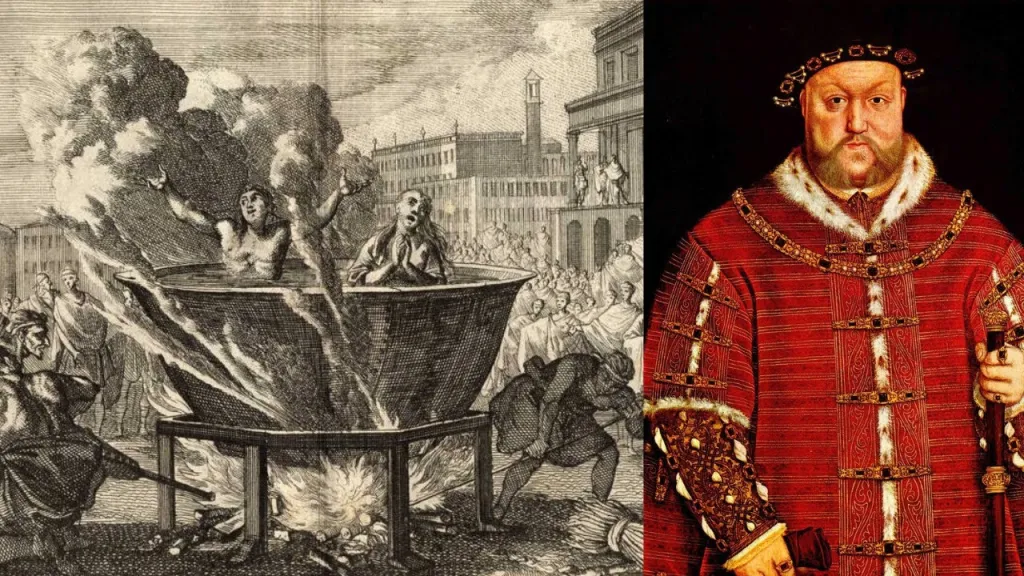
In 1531, Richard Roose, a cook employed in the household of the Bishop of Rochester, poisoned a pot of porridge served to the bishop’s household. Two people died as a result. Later that year, Parliament passed a new law making boiling alive the prescribed punishment for poisoning.
Roose was executed at Smithfield. Contemporary chroniclers recorded that he was repeatedly lowered into a cauldron of boiling water for several minutes at a time until he finally stopped showing signs of life. The same fate befell the maidservant Margaret Davies in 1542 after it emerged that she had murdered four members of the family she served.
The punishment survived for only a short time. In 1547, Henry VIII’s son, King Edward VI, abolished execution by boiling, bringing one of England’s most gruesome methods of capital punishment to an end.
To the Bitter End
Public executions disappeared from London’s streets in 1868, but not because death had become any less useful to the state. It had simply become less fashionable to watch. The scaffold was moved behind prison walls, the crowds were sent home, and the spectacle quietly gave way to privacy. Britain had finally decided that execution was perfectly acceptable, provided nobody had to see it. It seems the only thing Britain found harder than inventing new ways to execute people was giving them up altogether.
Discover more from London Macabre
Subscribe to get the latest posts sent to your email.