
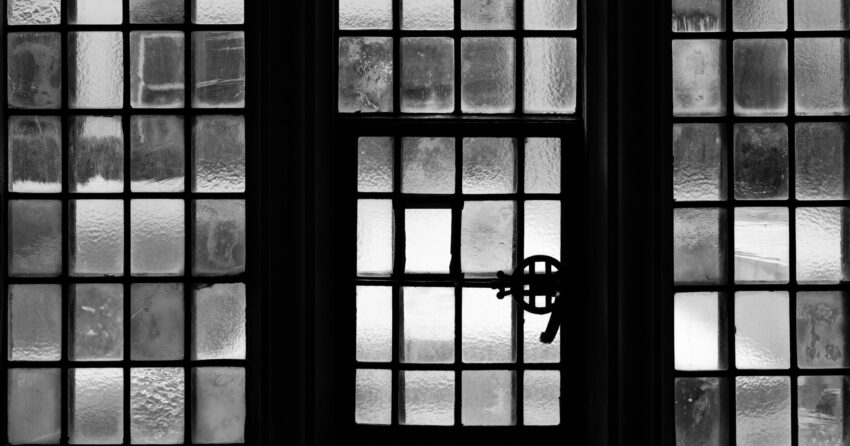
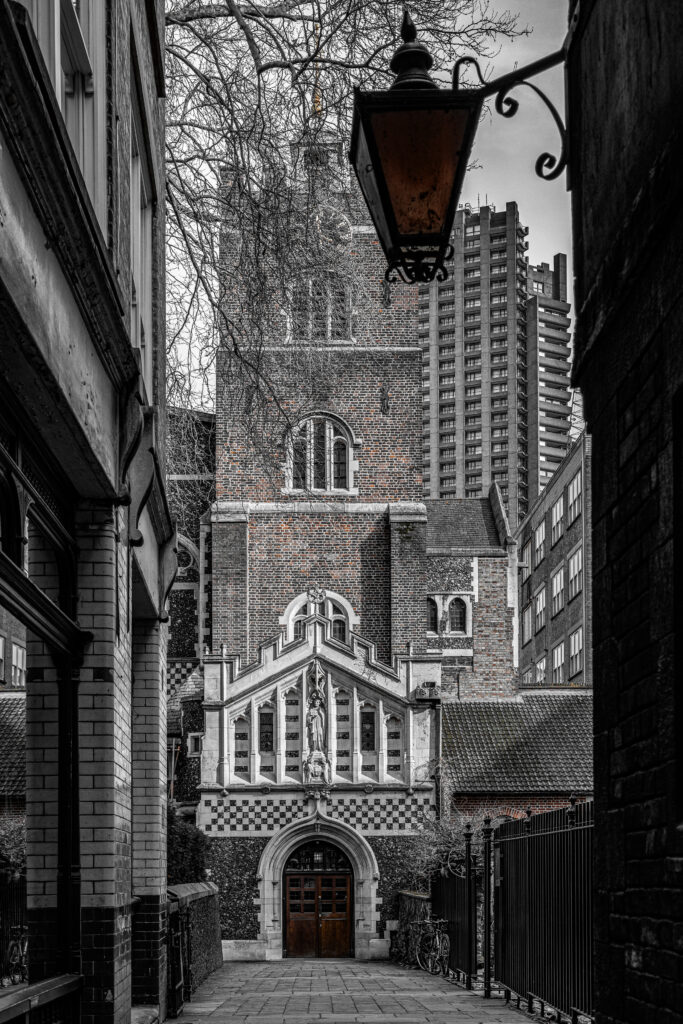
In the very heart of old London, at Smithfield, stands the city’s oldest church – St Bartholomew the Great. Stone, cold and silent, it is surrounded by a long-forgotten graveyard, its ground rising noticeably higher than the surrounding paths. This thick layer of earth, heaped up over centuries to make room for successive generations of the dead, makes the place feel steeped in the breath of the past. The church’s interior – its stark columns, stone arcades and cloisters – exudes an air of mystery and medieval gloom. It is little wonder the site has long been regarded as one of the most haunted places in London.
Rahere: Founder and Visionary
The church and its adjoining hospital were founded in 1123 through the efforts of an extraordinary man – Rahere, once a jester, minstrel and favourite at the court of King Henry I. Over time, he abandoned courtly pleasures to devote himself to the service of God. During a pilgrimage to Rome, Rahere fell ill with malaria and, in a feverish state, was taken to the Roman hospital of San Bartolomeo, which still exists today. Lying between life and death, he is said to have had a vision in which Saint Bartholomew instructed him to build a similar place in London. Rahere vowed that if he survived, he would found a hospital and church for the poor and the sick.
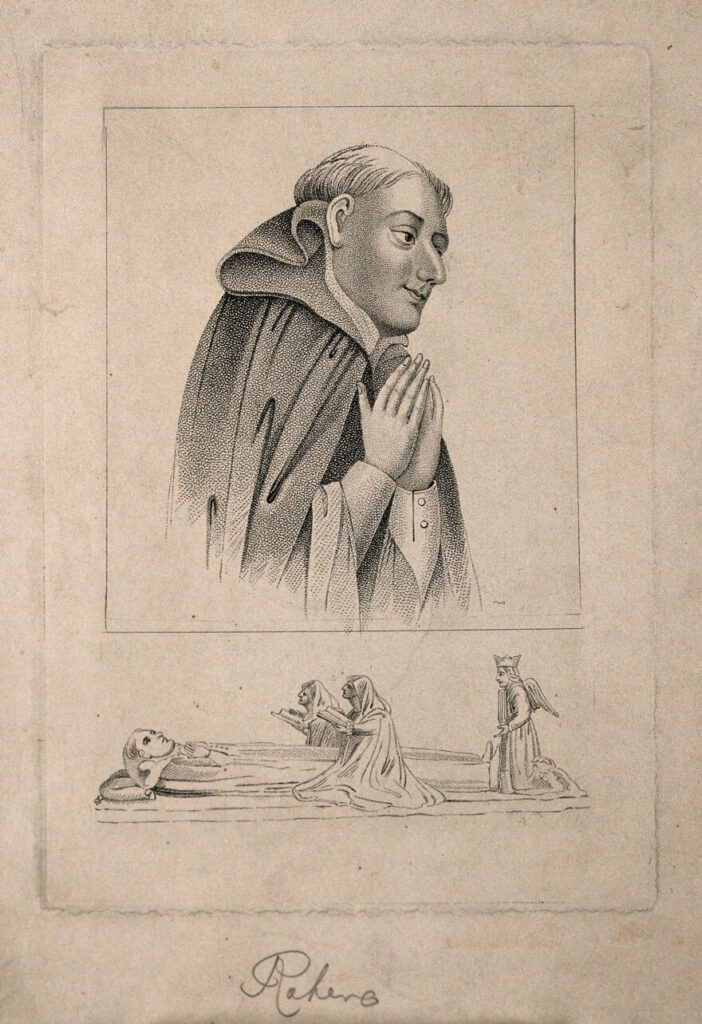
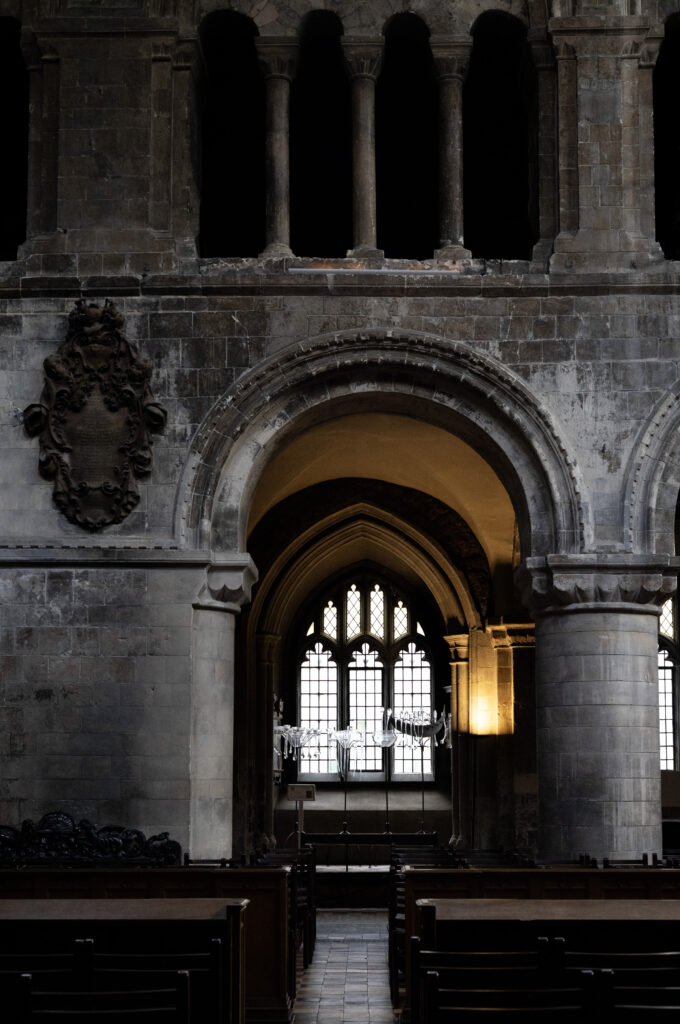
God answered his prayers. On returning to England, Rahere established St Bartholomew’s Hospital and Church, around which he gathered a community of Augustinian canons. As prior, he served here for twenty-two years until his death, and his work became one of the cornerstones of London’s religious life.
His royal connections were not without importance – the former courtier of Henry I received from the monarch a grant of land in Smithfield and funds for construction. Thanks to this support, Rahere’s enterprise proved a success, and his vowed sanctuary became a place of prayer, healing and hope.
St Bartholomew’s Through Turbulent Centuries
For centuries, the church flourished, until 1539, when Henry VIII broke with Rome and dissolved numerous monastic communities, including the one gathered around St Bartholomew the Great. Part of the twelfth-century Norman nave was demolished, and for a time the church fell into ruin. During Queen Mary’s reign the Dominicans briefly returned, but when Elizabeth I ascended the throne the church was converted to Anglican worship.
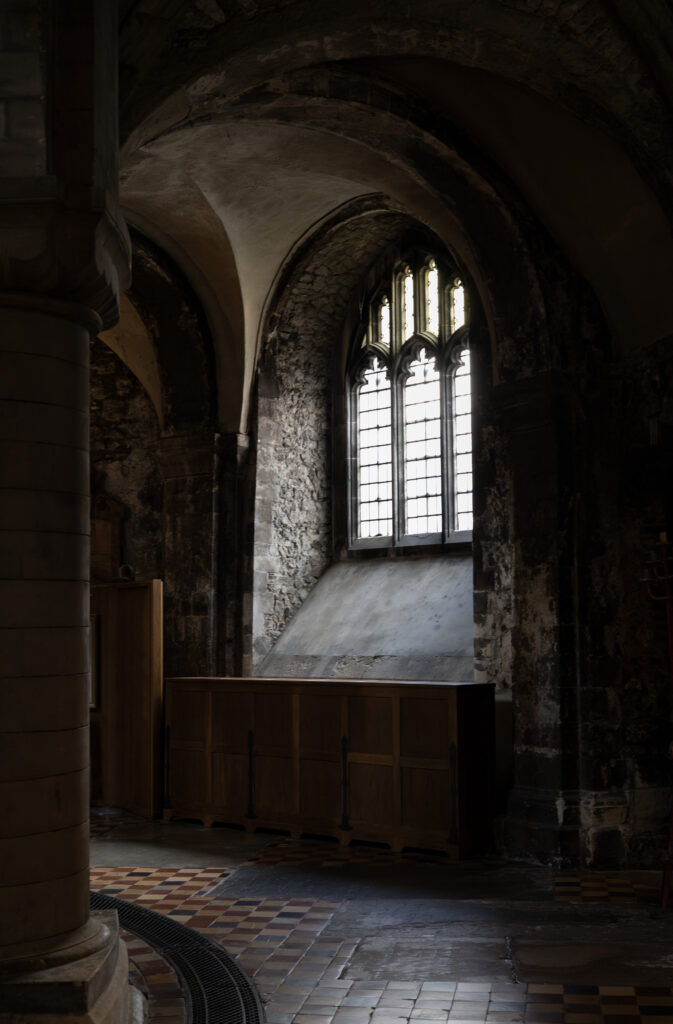
The Great Fire of London in 1666 spared St Bartholomew’s, though it destroyed almost everything around it. New buildings quickly rose to surround the church, hiding it in a maze of streets and workshops. Its doors, stone arches and arcades vanished behind plain brick walls that divided the once-spacious interior into living quarters, workshops and storerooms. The former cloisters were turned into stables, the crypt became a coal and wine cellar, and the church’s eastern corner was used as a type foundry.
In the eighteenth century, the Lady Chapel became a private residence, while other parts of the complex served as schools, carpenters’ workshops and a hop warehouse. In the nineteenth century, a pub, food stalls, a blacksmith’s forge and even a tobacco factory found their way inside. When plans were drawn up to demolish the remains, the city’s heritage enthusiasts campaigned to save the church. Thanks to their efforts, it not only survived but began a long process of restoration that lasted for decades.
St Bartholomew the Great Today
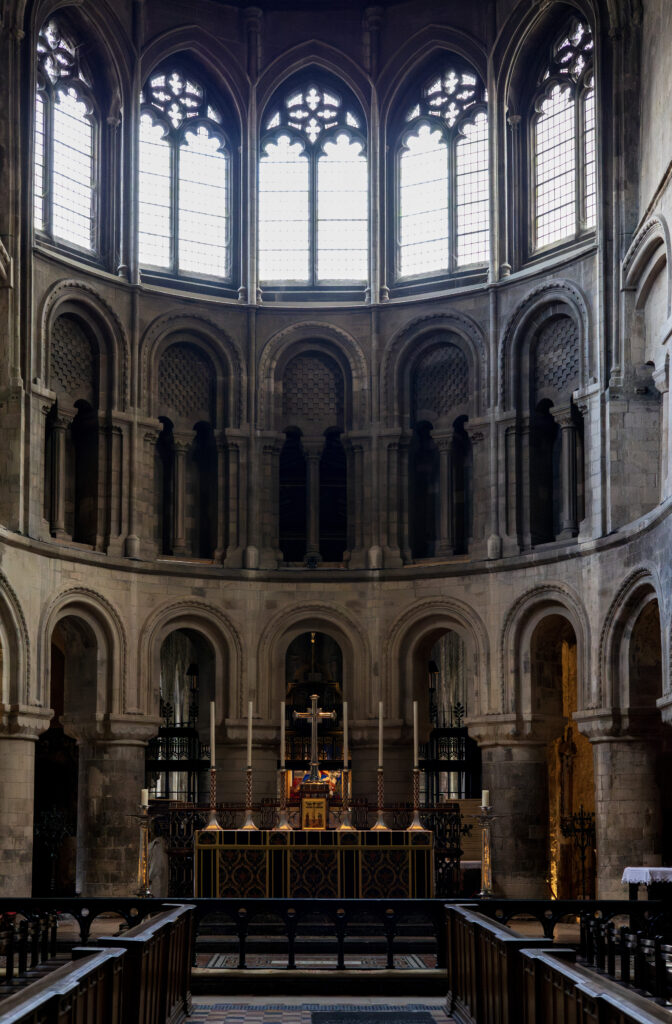
Today, St Bartholomew’s once again inspires awe – cold, monumental, yet still imbued with the spirit of the past. The interior preserves original elements of Rahere’s twelfth-century design: the four-bay choir, the presbytery, the apse and the remnants of the nave – among the finest surviving examples of Norman ecclesiastical architecture in London.
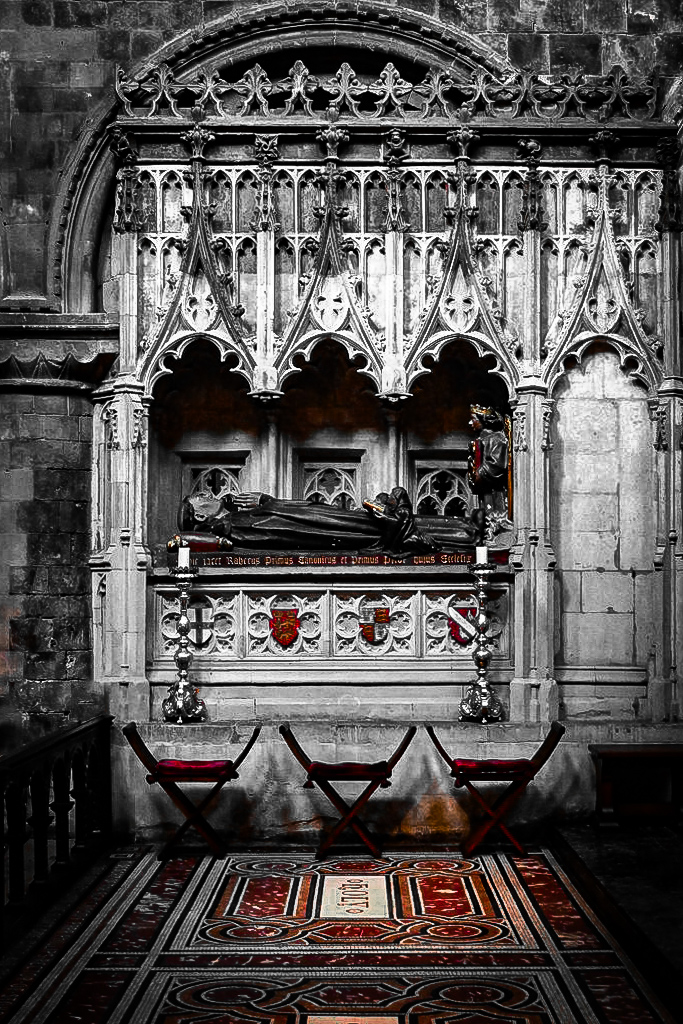
Just by the altar, on the left-hand side, lies the founder himself. Rahere’s tomb is covered by a carved canopy beneath which – legend says – his presence endures. In 1865, the church’s doorkeeper dared to open the tomb and stole one of the monk’s sandals. Shortly afterwards she fell seriously ill, and when she confessed her theft, the relic was returned to its place. From then on, Rahere’s ghost began to appear – a hooded figure moving through the churchyard, vanishing among the arcades and shadows.
Witness Accounts of Hauntings
Witnesses have spoken of footsteps echoing through the empty nave and of the monk’s figure appearing in the half-light. One rector claimed to have seen him at dusk, when the church was utterly silent. A monk in a black habit stood bathed in the glow from the vestry; when the clergyman addressed him, the apparition turned without a word and walked towards the Lady Chapel – then dissolved into the air as the rector reached out to touch him.
Some have glimpsed him from the corner of their eye; others heard only his steps. Another witness told of a luminous white figure hovering above the floor at the centre of the church, which reminded him of his daughter. Alarmed by the sinister omen, the man contacted her – she was living in Australia at the time – and learned that at that very hour she had been seriously ill and dreaming that she stood in the nave of St Bartholomew’s, speaking with her father.
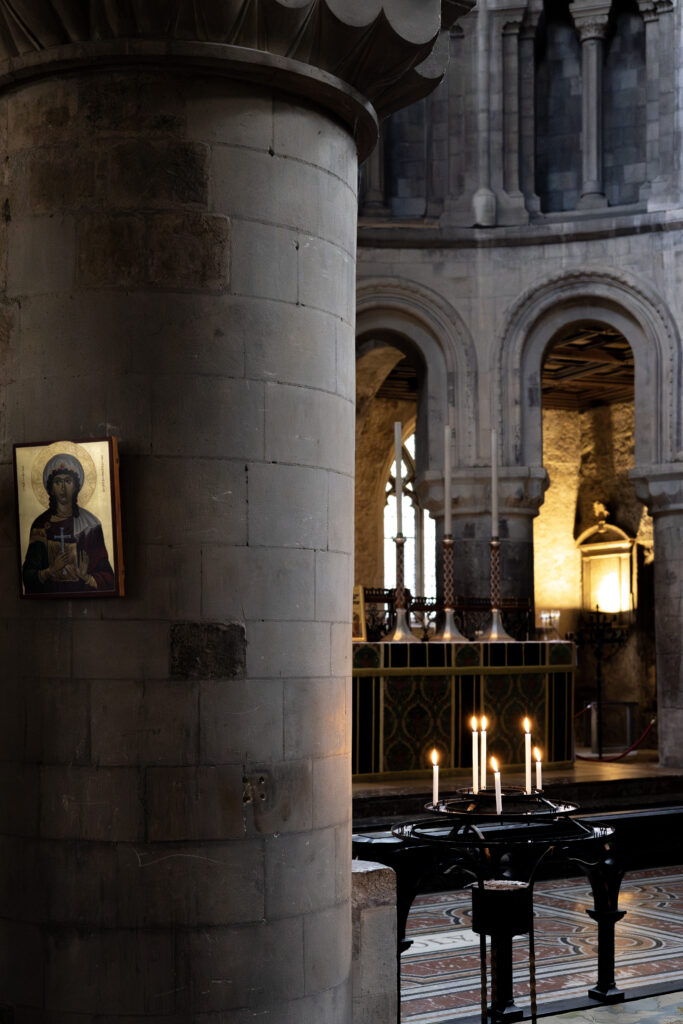
Rahere is not the only one said to linger here. Two tourists visiting the church on a sweltering July morning reported a sudden chill and a wave of panic that swept over them in the main nave. Both felt that something dark was following them, though the church was completely empty. One of them ran screaming into the street, blinded by sunlight after the nave’s darkness; the other followed moments later, equally terrified. Both swore they would never again cross its threshold.
Indeed, at St Bartholomew’s the past is far from dead – the walls remember all who have suffered, prayed and died here. The church’s floor and walls are lined with tombstones and memorials to those who passed away over the centuries. In the very stone one can still hear the echo of prayers, the breath of pilgrims and the footsteps of the monk who never left his creation.
Discover more from London Macabre
Subscribe to get the latest posts sent to your email.