

The most clichéd image of London anyone can sell you before you ever visit the city is that of fog-shrouded streets, relentless cold rain, restless ghosts, and gentlemen of questionable mental stability duelling over some tragic heroine in the shadows. We can blame Edgar Allan Poe, Charles Dickens and Arthur Conan Doyle for helping to create and immortalise this enduring vision of the dark and mysterious metropolis.
Come here today, however, and you will quickly discover that the famous, asthma-inducing pea soupers disappeared without a trace after the Clean Air Act of 1956. The streets can hardly be described as empty beneath the constant racket of traffic, and the chivalrous British gentleman has largely given way to youth gangs buried deep within council estates across the capital. Fortunately, not all of London’s dark Victoriana and irresistible macabre has vanished. Whatever the modern city has become, there remains one institution upon which you can always rely for a proper Gothic plot: the pub.
Pubs continue to dot the streets as they have done for centuries, filled with the suggestive smell of stale ale mingled with punters’ sweat, the weary sight of drooping eyelids above equally weary faces, and gleaming gold signs bearing yet another ridiculous name such as The Duck and Ladle. So, to return to the grim and haunted realities of long-forgotten London, one should surely begin with a pub, for if there is ever to be a grisly murder followed by an unsettling tale of ghosts, it will almost certainly involve either a pint or a whore.
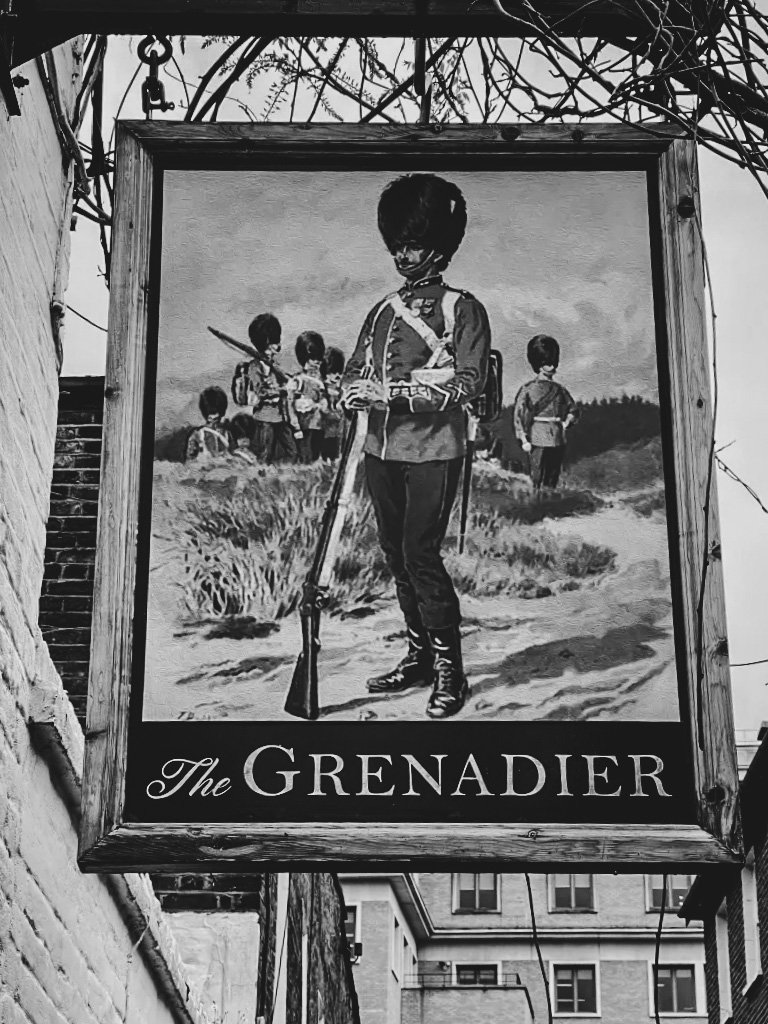
A Soldier’s Pub
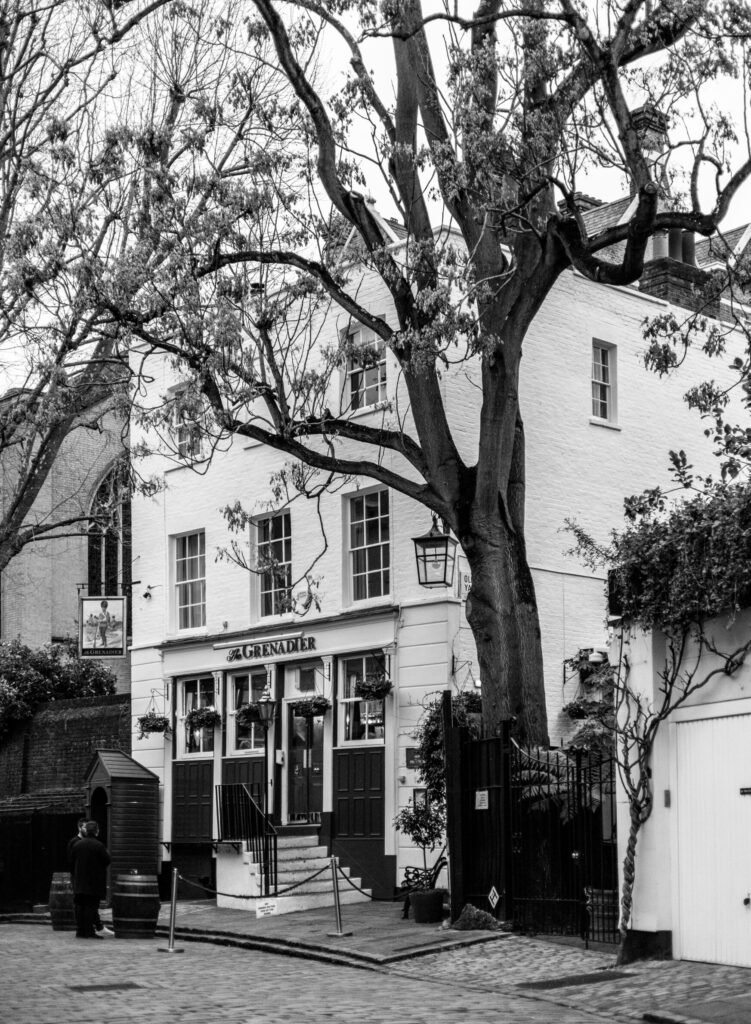
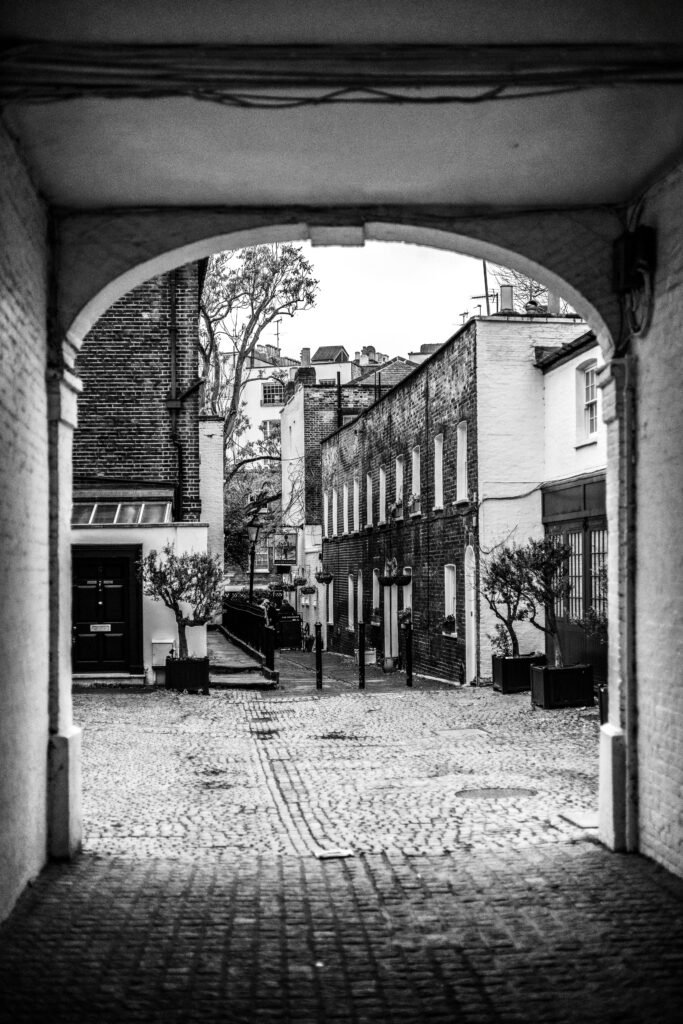
Tucked away in the heart of Belgravia, between luxury hotels, Michelin-starred restaurants and modern office buildings, stands the unassuming Grenadier. It is so well hidden that you may find yourself walking past it twice before realising that the dead-end cul-de-sac leads not to a brick wall, but to the back door of one of London’s most haunted pubs. Despite its secluded location, it is almost always full of office workers escaping their dreary desks. It is therefore best visited in the early afternoon on almost any day except Thursday.
This Georgian public house once served as the officers’ mess for the 1st Regiment of Foot Guards, later known as the Grenadier Guards. The narrow lane running alongside it, Old Barrack Yard, still preserves the memory of the days when soldiers trained here before marching off to war, while the old mounting block outside serves as another reminder of its military past. In 1815, troops from the regiment prepared on this very ground before leaving for the Battle of Waterloo. At the time, the pub was known as The Guardsman; it was later renamed The Grenadier in honour of the regiment’s new title following the victory.
The first floor, as it exists today, once housed a large dining room where meals were served, while the bar occupied what is now the cellar. It is there, among the barrels and brickwork, that the ghost of a murdered soldier is said to return every September. Whether he comes back for justice or simply for another drink remains rather unclear.
Gambling With Death
When they were not busy preparing for battle, many soldiers devoted themselves with equal enthusiasm to drinking and gambling, a combination that rarely ended in quiet conversation. One September evening, a young officer was caught cheating during a card game. His comrades wasted little time on formalities.
They dragged him outside, administered their own version of military justice, and battered him so severely that he barely managed to stagger back to the pub’s cellar before dying from his injuries. Whether he died from a formal flogging or an alcohol-fuelled beating depends on which version of the story one chooses to believe. The outcome, however, remains remarkably consistent. Since then, several successive landlords have reported a series of unexplained disturbances, most of which seem to reach their annual peak in September.
A Ghost Without a Name
As is so often the case with London’s most famous ghosts, the paperwork is rather inadequate. The name of the unfortunate soldier has long since disappeared from the historical record. Some stories call him an officer, others a guardsman or subaltern. Modern retellings often refer to him as “Cedric”, although no contemporary source identifies him by name, and inconveniently for those who insist on the story, no public record describes a violent death on the premises either.
The September Hauntings
According to the story, one September night, Roy Grigg, the son of a former landlord, noticed a dark shape in the corridor outside his bedroom, its door standing slightly ajar. He watched as the shadow slowly grew larger and drifted along the landing before disappearing entirely. There was nobody else on the upper floor.
But Roy was not the only member of the household to report strange encounters. His friend staying at the pub had heard all the ghost stories beforehand and decided to sleep with a set of rosary beads beside his bed. During the night he woke to find a shadowy figure standing over him before it disappeared without a sound. The rosary, apparently, offered little practical protection, yet another disappointing performance from organised religion.
Ten days later, Roy’s mother was sitting in her bedroom upstairs, half-dressed and certain she was alone in the building, when she saw a man climbing the staircase. She hurriedly reached for her dressing gown, but when she turned to face the approaching figure, she found herself staring at an empty staircase.
The following September, a visitor staying at the pub noticed a man walking up the same staircase towards the family’s bedroom. Before he could call out, the figure simply vanished in exactly the same place where Mrs Grigg had reported seeing him the previous year.
Even the family dog appeared to notice the change. Every September, without fail, the German Shepherd became agitated and would whine, growl and refuse to go anywhere near the cellar door, but as the month drew to a close it gradually settled again.
The Evidence, Such as It Is
A later landlord, Geoffrey Bernerd, reported a similar catalogue of unexplained incidents, once again concentrated around the month of September. Guests, staff and Bernerd himself heard persistent knocking on walls, objects were found in places where nobody remembered leaving them, lights switched themselves on and off in the middle of the night, and taps began running without anyone touching them. Bernerd’s daughter also spoke of a dark figure moving silently across the first floor near the family’s bedrooms.
You can always count on a Londoner’s imagination, especially after a few pints, but there is one report that remains wonderfully absurd. A senior officer from New Scotland Yard claimed to have burnt his hand after reaching towards what appeared to be cigarette smoke drifting through the cellar. Whether the ghost had taken up smoking or simply objected to the company remains open to interpretation.
A Very Profitable Haunting
As with every respectable ghost story, it is difficult to ignore the commercial opportunities that accompany the supernatural. Ghosts have a curious habit of appearing wherever they happen to improve business. Has the Grenadier become rather more popular since acquiring the ghost of a murdered soldier? Was it this gruesome tale that persuaded Madonna to stop by for a drink? And how many tourists, already determined to spend twenty pounds on fish and chips, are happy to swallow a ghost story for free? Like most good legends, this one costs very little to tell and has probably paid for itself many times over.

Paying Off the Dead
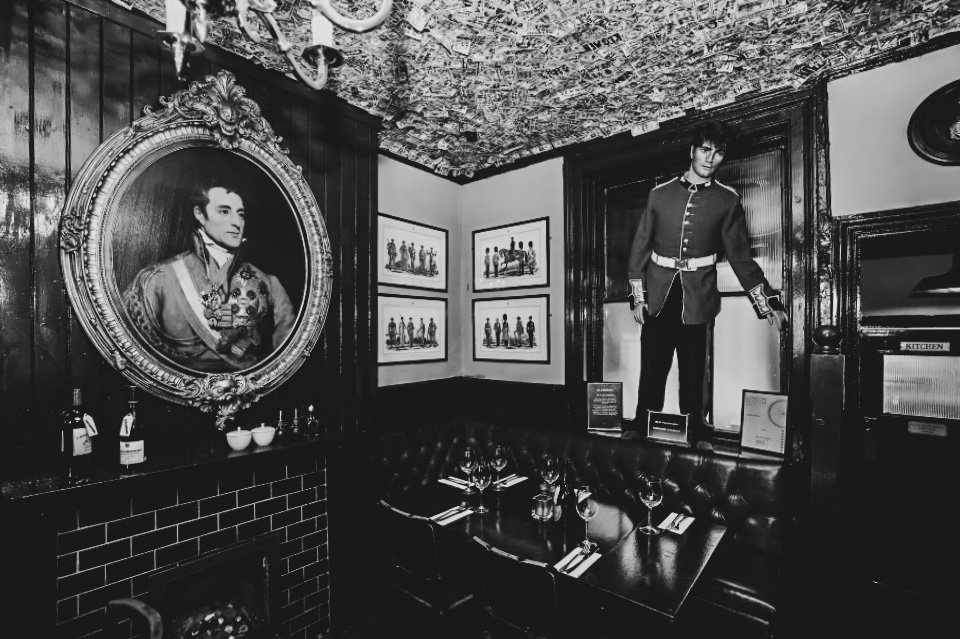
Whatever the truth, one tradition survives to this day. Visitors pin banknotes from around the world to the ceiling in the hope that, if the dead officer’s gambling debt is ever finally paid, his restless spirit might at last leave the pub in peace. Judging by the banknotes covering every inch of the ceiling, the debt has either been collecting interest for the better part of two centuries or the ghost has become remarkably expensive to get rid of.
Discover more from London Macabre
Subscribe to get the latest posts sent to your email.