
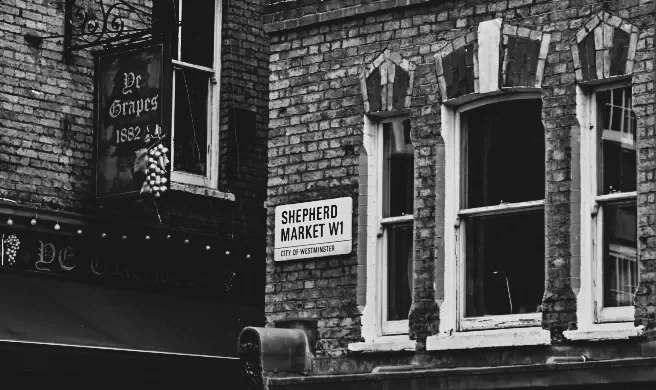
Before Mayfair became one of the most expensive districts in central London, this area was simply open countryside: fields and pasture known as Great Brookfield. The River Tyburn, one of Thames’ tributaries, ran through the peaceful meadows undisturbed before finally disappearing beneath the growing metropolis in the second half of the eighteen-century.
For centuries, this otherwise unremarkable patch of quiet countryside was invaded by enormous crowds arriving from London for the one of the city’s most unruly public gatherings: the annual May Fair from which the surrounding district eventually took its name.
This is the story of drunken crowds, prostitution, gambling, theatrical farce, fighting, moral reformers, soldiers, a murdered constable, an alleged murderer fleeing to Ireland, fake executions of puppets, exotic animals, and an aristocracy eventually deciding that all this was terribly inconvenient for the property market.
A Respectable Beginning
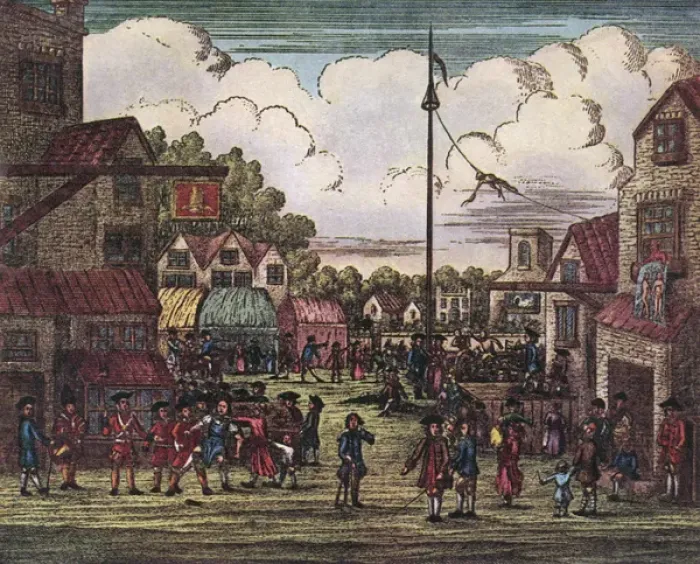
The fair may have had medieval origins, although its early history is difficult to establish with certainty. It was first recorded in 1560 as the “Saint James’s fayer by Westminster”. In 1688, King James II granted a royal charter allowing Sir John Coell and his heirs to hold the fair at Great Brookfield from 1 to 15 May. By the late seventeenth century, it had become firmly established as the fortnight-long May Fair. It was postponed in 1603 because of plague but otherwise continued unabated through the seventeenth century.
The fair originally had a respectable enough purpose. It was a livestock market, and cattle and other animals were among its principal attractions. That, however, was before London discovered that selling livestock was considerably less exciting than selling almost everything else. As the years passed, what had once been a livestock market gradually became something considerably harder to classify, and by the early eighteenth century its economic purpose was certainly secondary to entertainment.
One academic study by Colin Smith describes the changing reputation of London’s fairs, which came to be regarded by authorities as “snares of vice and seedbeds of plebian disorder”. May Fair itself was described in a contemporary account as “only a FAIR in name, but indeed a RIOT”. It is difficult to imagine a more concise review.
From Cattle to Chaos
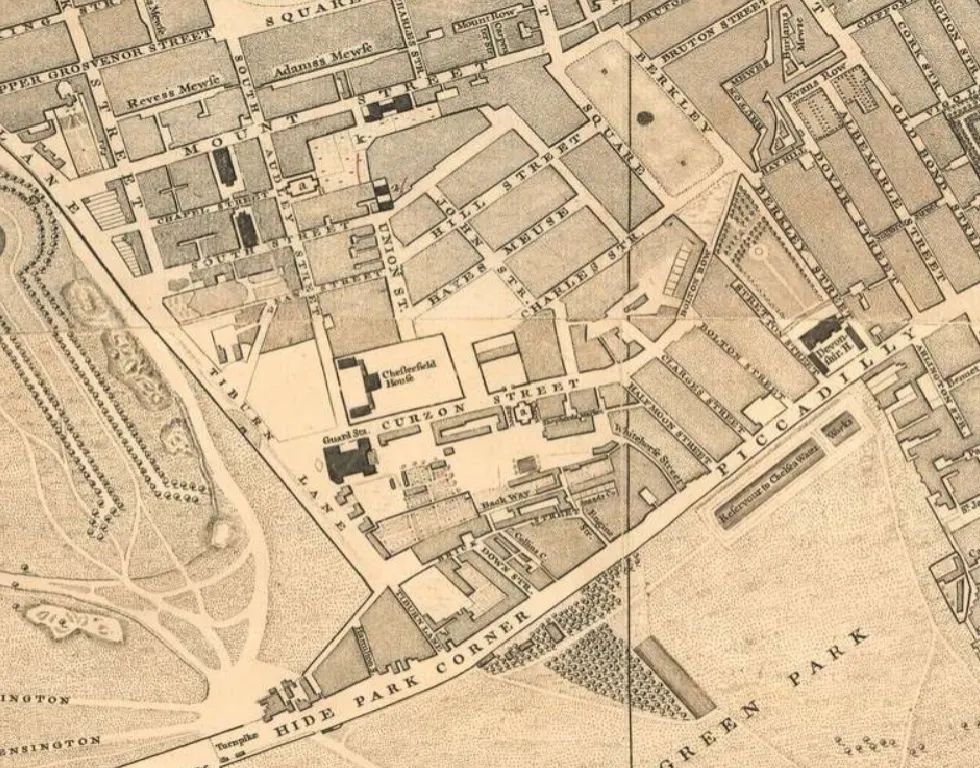
By the beginning of the eighteenth century, May Fair had expanded across what are now Shepherd Market, Shepherd’s Court, White Horse Street, Sun Court and Market Court, as well as the open ground stretching westwards towards what is now Park Lane. It was no longer merely somewhere to buy a cow.
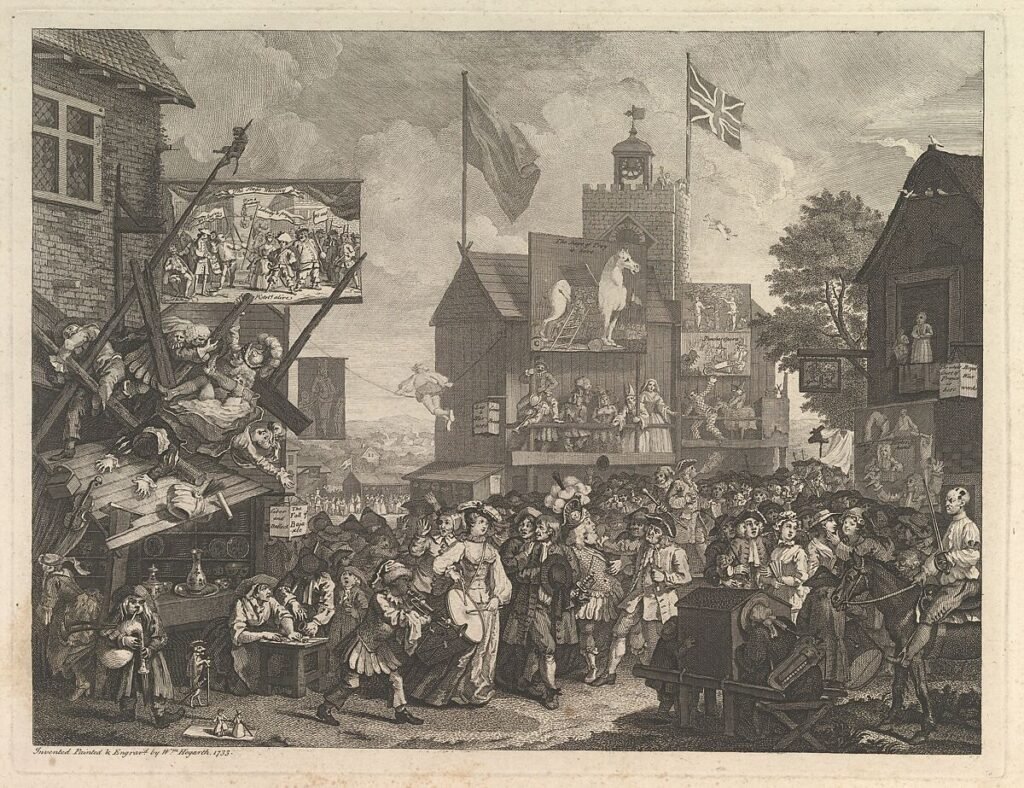
The attractions multiplied as the years passed. There were fencing displays, juggling acts, puppet shows, theatrical performances, comical drolls and bare-knuckle fighting. There were gambling tables, sausage stalls, gingerbread sellers, swings and roundabouts. The windows of surrounding houses could even become makeshift stages for puppet performances.
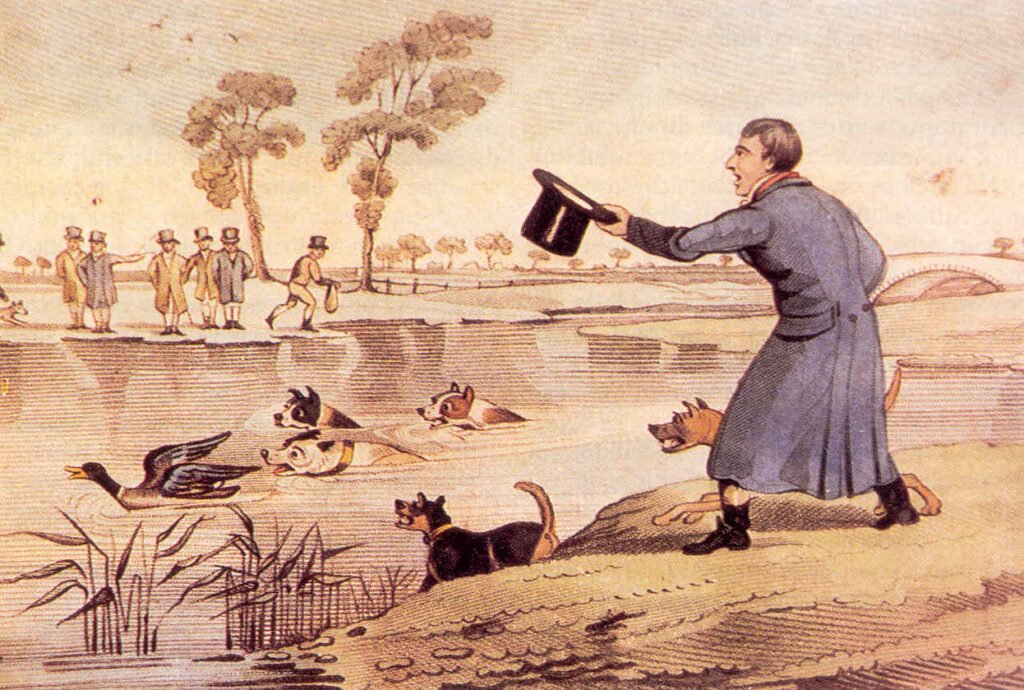
There were stranger entertainments too. Women competed in foot races, crowds gathered for eating contests, and rope dancers appeared alongside the more conventional fairground attractions of lotteries and raffles. The nearby Dog and Duck public house even had a pond where the distinctly unpleasant sport of duck-hunting took place, an amusement associated with the butchers of Shepherd’s Market.
A contemporary observer recorded two tigers at the fair. There was also a “Turkey Ram” with an enormous amount of wool. Later accounts describe even more extraordinary attractions, including a Frenchman exhibiting his wife’s supposed supernatural strength. The apparently delicate woman was said to lift a blacksmith’s anvil using her hair, have the anvil placed on her chest, and then have a horseshoe forged on it while it rested there. Quite how many people considered this a sensible way to spend an afternoon is unfortunately not recorded.
The fair also developed a taste for theatrical executions. After the executions of Jacobite rebels following the 1745 rebellion, the beheading of puppets became an attraction too. The performance apparently continued for years. Another historical description says that a mock execution was staged in a coal shed attached to a grocer’s shop, with a shutter arranged as an execution platform. At a fair already condemned for vice, even execution had become entertainment.
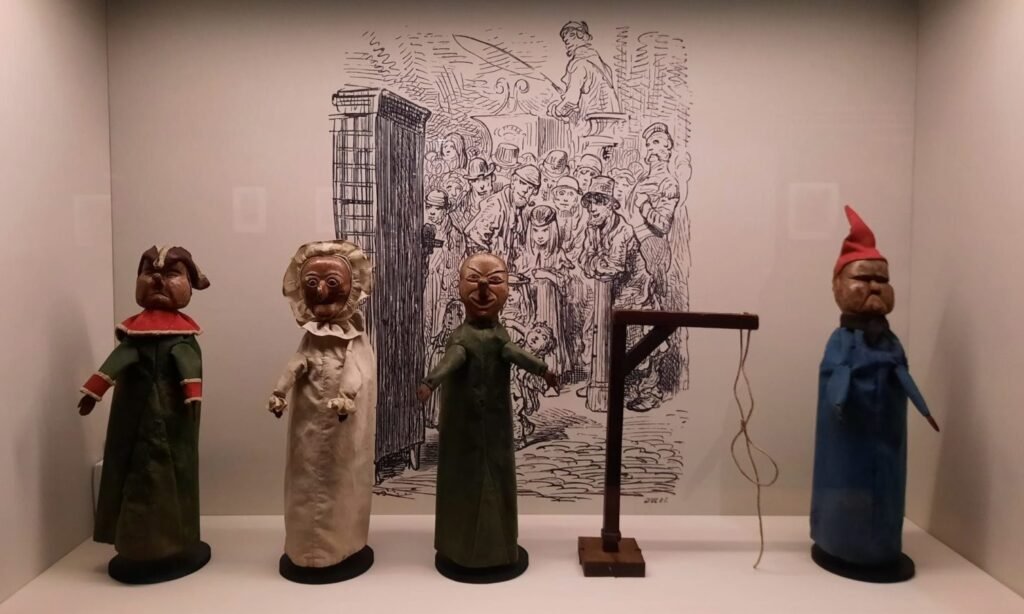
In other words, the modern Shepherd Market began life as the sort of place where you could buy meat, watch a puppet show, gamble away your wages, eat sausage, watch two men punch each other in the face, marvel at a tiger, and then go and see a dog hunt a duck.
And naturally, wherever large numbers of Londoners gathered together with alcohol, gambling and entertainment, other professions followed. Academic research and contemporary descriptions portray May Fair as a concentrated mixture of heavy drinking, prostitution and general disorder. The fair acquired a reputation for pickpockets, prostitutes and ruffians who worked alongside the legitimate vendors. The distinction between entertainment and criminal enterprise could become rather thin.
Tiddy-Doll, King of the Gingerbread Men
One of the fair’s most colourful regulars was a gingerbread seller known as Tiddy-Doll. The old histories of London’s street vendors identify his proper name as Ford.
He was a famous Georgian London street hawker, born in France, who sold gingerbread at fairs and public gatherings. He was not content simply to stand behind a stall and wait for customers. He dressed absurdly extravagantly, wearing a feathered hat, a lace-trimmed shirt, white and gold clothing, silk stockings and a spotless white apron. He then entertained potential customers with songs, rhymes and elaborate sales patter.
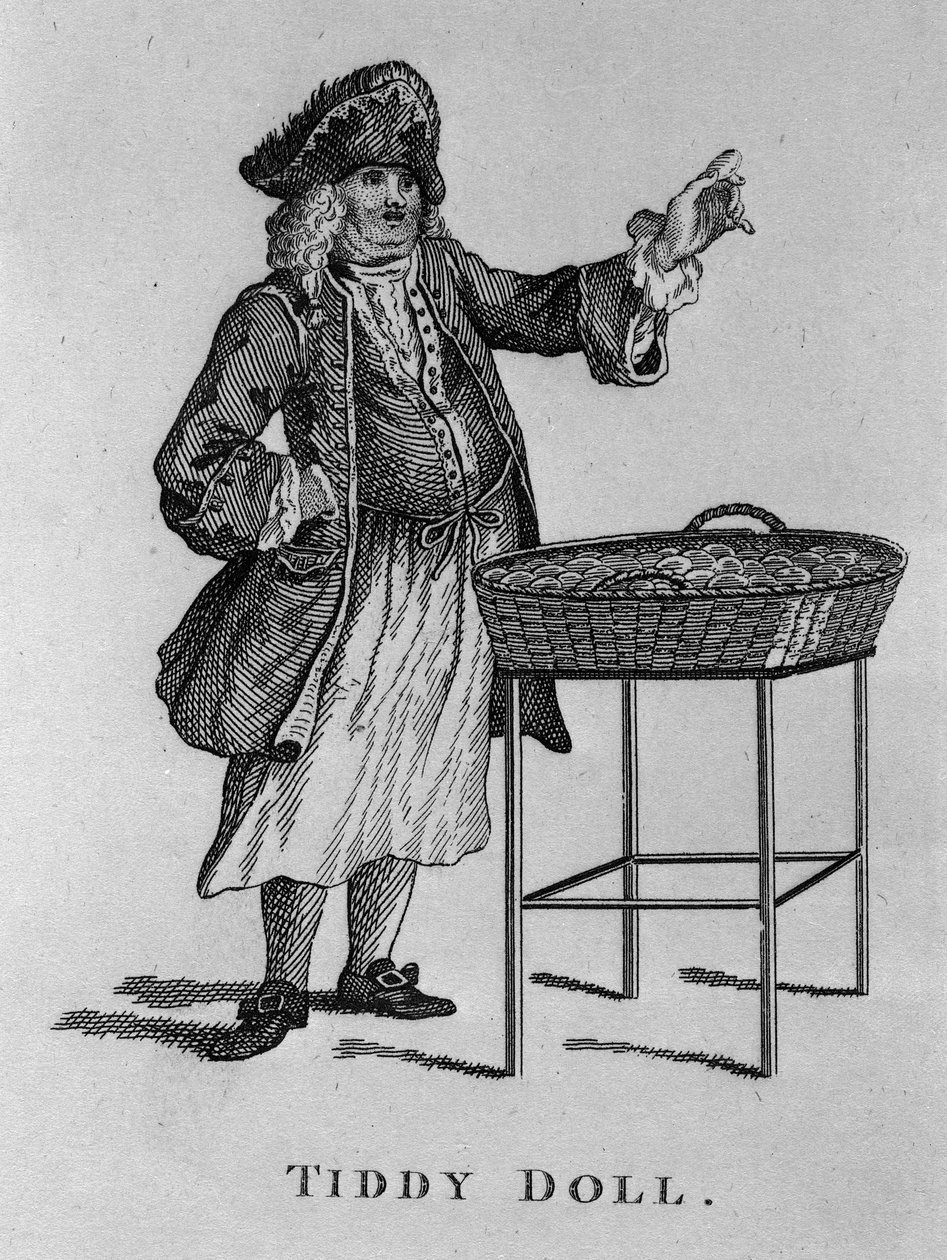
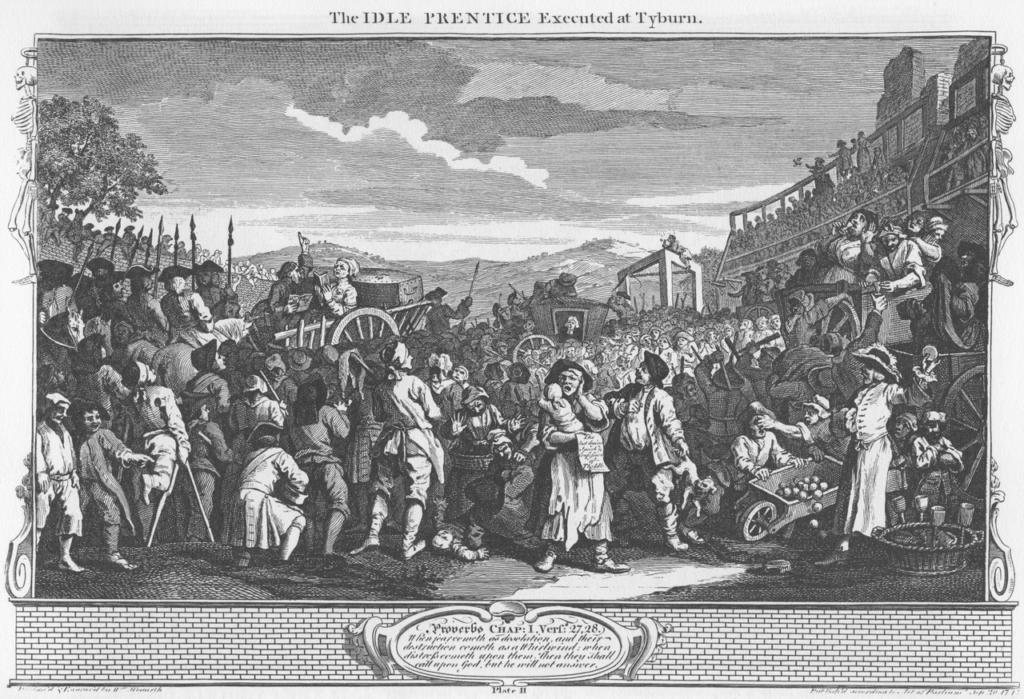
Tiddy-Doll became so famous that he was known as the “king of itinerant tradesmen”, and his name entered popular language. Someone dressed with excessive extravagance, or rather too much like a fop, could be told that they looked “quite the Tiddy-Doll”. He became a familiar figure in London’s popular visual culture and appears in William Hogarth’s The Idle ‘Prentice Executed at Tyburn, selling gingerbread near the crowd gathered for an execution.
There was even a death attached to the man, although fortunately for Tiddy-Doll it was not his own. At one point, he disappeared from his usual gingerbread stand in the Haymarket for several days. A newspaper promptly reported that the famous vendor had been murdered, apparently providing enough lurid detail to make the story worth printing. There was just one problem: Tiddy-Doll was not dead. He had simply gone to another country fair. The gingerbread king eventually returned to London and ruined an excellent murder story by being alive.
The Riot That Left a Body Behind
In 1702, the disorder at May Fair became genuinely violent.
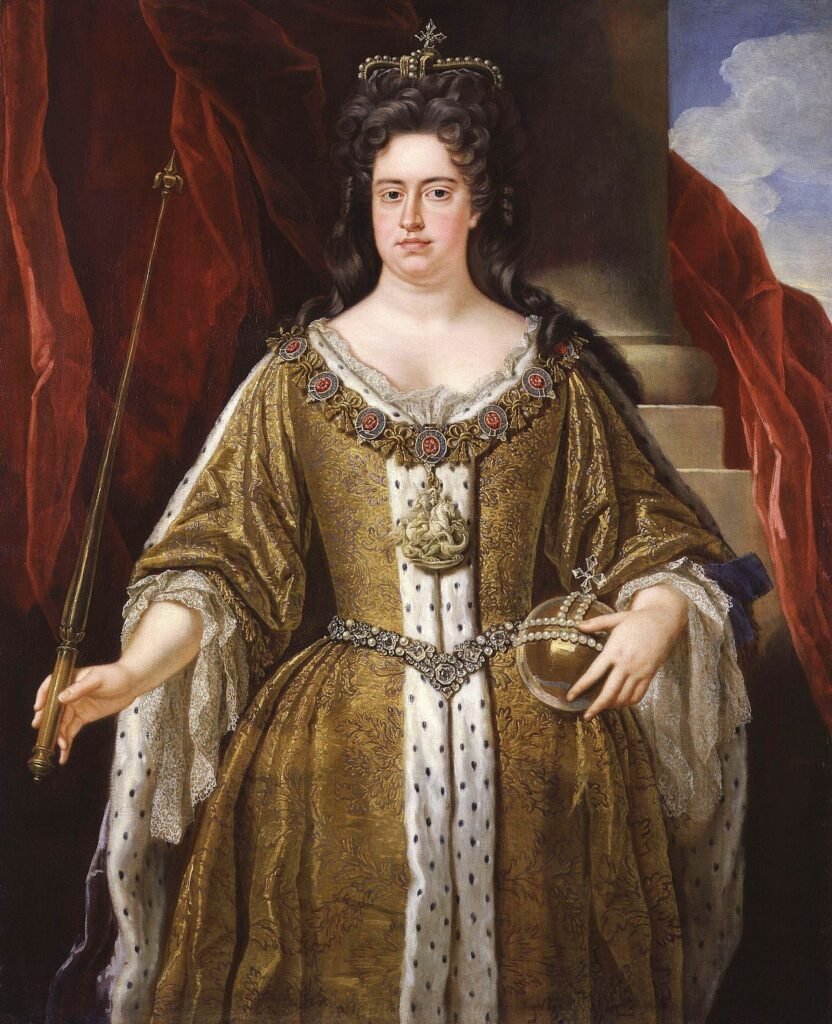
The authorities had been attempting to enforce Queen Anne’s campaign against vice and debauchery, and parish constables and other local peace officers were sent into the fair to arrest several women described in contemporary reports as “lewd women”. There was, of course, no Metropolitan Police at the time; that organisation would not be established until 1829. London instead relied on a mixture of parish constables, watchmen, magistrates and other local officers to maintain order. So this was not a modern police raid, but a group of local law officers attempting to impose the authorities’ moral regulations on a drunken fair. They had also picked a particularly bad place to do it.
The attempt to remove the women provoked resistance from soldiers attending the fair.
The soldiers intervened. Other constables arrived. The crowd joined in.
A contemporary newspaper reported that the constables were opposed by “several rude souldiers”, one of whom was imprisoned while others were sought. But the later evidence gets much bloodier.
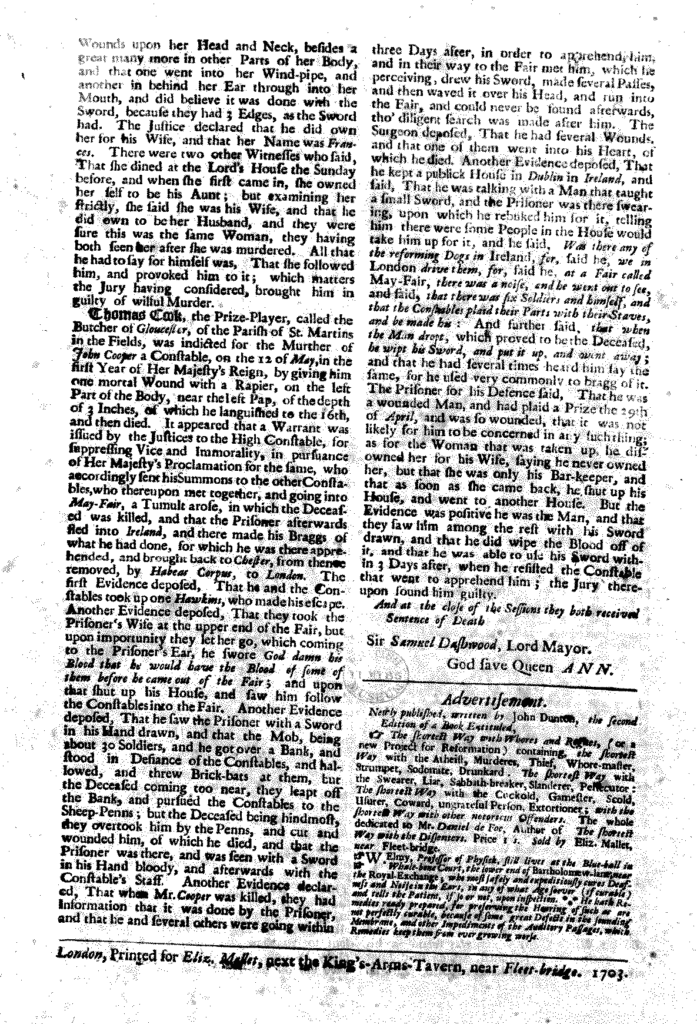
What had begun as an attempt to remove prostitutes turned into a full-scale riot involving soldiers, constables and an increasingly violent crowd. One constable, John Cooper, was killed while attempting to suppress the disorder, and three other constables were seriously injured. Later accounts give the grisly detail that Cooper was stabbed in the belly and survived for four days before dying from his wound.
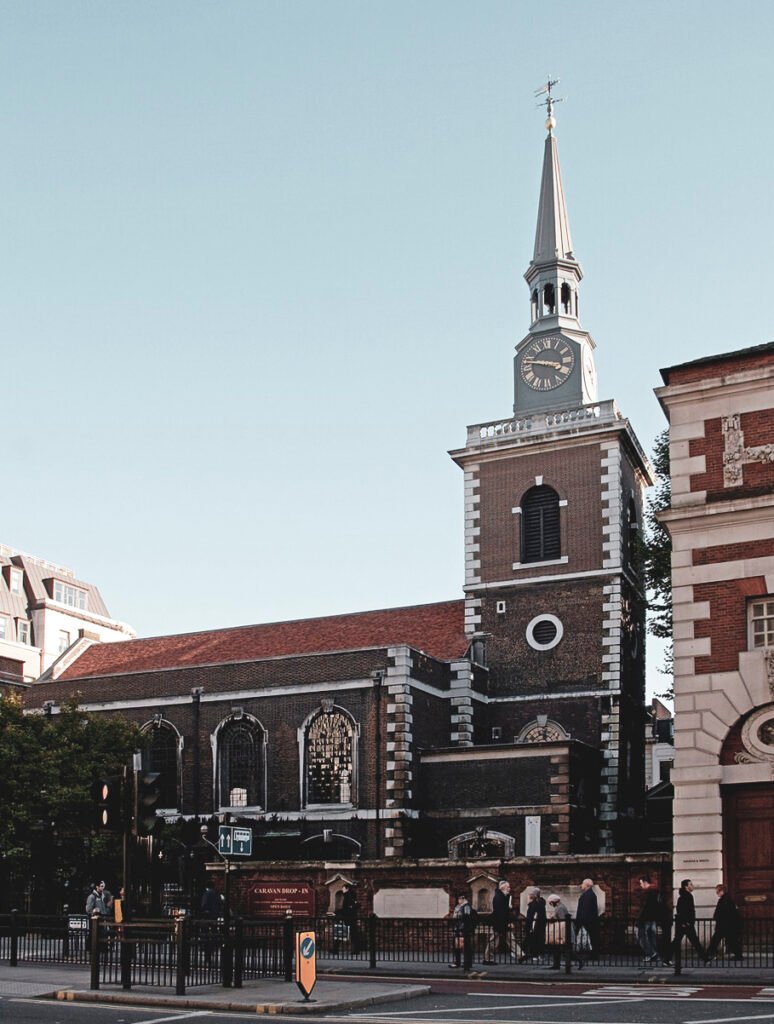
His death was serious enough to receive its own funeral sermon. Josiah Woodward preached at St James’s Church on 21 May 1702, describing Cooper as a constable “barbarously Murther’d at May-Fair” while carrying out his duty.
According to the Old Bailey proceedings the principal attacker was identified as Thomas Cook, a prize-fighter and fencing master known as the “Butcher of Gloucester”. The reason for his fury was particularly appropriate to the surroundings: the reforming constables had arrested a woman whom Cook regarded as his wife, on suspicion of prostitution. Cook reportedly threatened that he would have the blood of some of the constables before he left the fair.
After the fatal riot, Cook fled to Dublin but was later apprehended and brought back to London for trial. Allegedly, while drinking in an Irish public house, he boasted about the killing and spoke contemptuously of the London informers who had pursued him. It is probable that his own loose tongue helped expose him. He was tried at the Old Bailey in July 1703 and sentenced to death. On 11 August 1703, he was taken to Tyburn and hanged.
The case did not end quietly. Accounts of the period record considerable controversy surrounding Cook’s guilt, and after his execution his body was reportedly taken away and displayed before his burial by people who believed he had been wrongly condemned.
It is difficult to imagine a more efficient advertisement for the argument that May Fair had become a public nuisance.
The Fair That Refused to Die
The authorities tried to suppress the fair more than once, but Londoners proved surprisingly reluctant to surrender fourteen days of gambling, drinking, fighting and cheap entertainment merely because respectable people had become offended by it.
In November 1708, the Westminster Grand Jury formally presented the May Fair as a “publick Nuisance and Inconvenience” and described the annual gathering as a riotous and tumultuous assembly. The following year, a royal proclamation attempted to restrict the construction of booths used for plays, puppet shows, gaming and music, as well as the “disorderly Assemblies” of “Loose, Idle, Disorderly People”.
Then, in 1709, a pamphlet was published specifically arguing for its suppression: Reasons for suppressing the yearly fair in Brook-Field, Westminster; commonly called May-Fair. It runs to 43 pages and survives in the Shakespeare Library’s collection. The language in this piece is spectacular. The fair was accused of being a “pestilent Nursery of Impiety and Vice” and of containing “Stalls of Vice, and Impurities not to be mentioned”.
The wording tells us rather more about the authorities’ attitude than it does about the fair itself. It was being condemned as a gathering place for the wrong sort of people. But was it?
A later source quotes a contemporary description of May Fair attracting “all the nobility in town” as well as ordinary people. The fair was therefore not simply a place where poor Londoners behaved badly while respectable people stayed safely at home. The fashionable classes went too. They could watch the same performances, gamble at the same tables and enjoy the same low entertainments as everyone else. The moral panic was partly about the fact that different social classes were mixing in the same space, which makes the eventual suppression rather more interesting.
The fair continued through various attempts at suppression because there was money to be made and Londoners were evidently willing to spend it. Even when official restrictions were imposed, entertainers and showmen found ways to return. The eventual problem was not simply morality. It was property.
When the Aristocrats Arrived
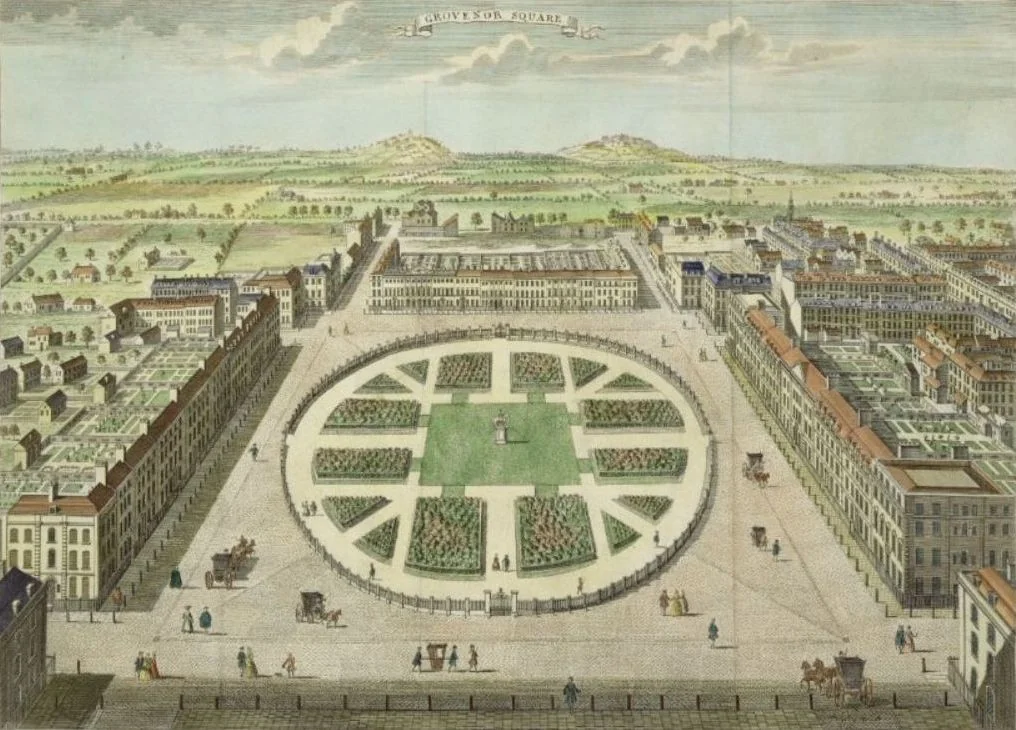
By the early eighteenth century, the countryside around May Fair was becoming increasingly valuable. Fashionable development was advancing around it, and land that had once been sufficiently remote for a fortnight of public revelry was becoming prime residential territory. The old countryside was disappearing fast beneath houses.
Unfortunately for the fair, houses tend to have residents.
The Grosvenor and Berkeley estates were transforming the area into an increasingly fashionable district. Wealthy residents did not particularly enjoy having thousands of drunken Londoners, prostitutes, gamblers, pickpockets and travelling entertainers appear outside their expensive houses every May. The fair had become an increasingly awkward neighbour.
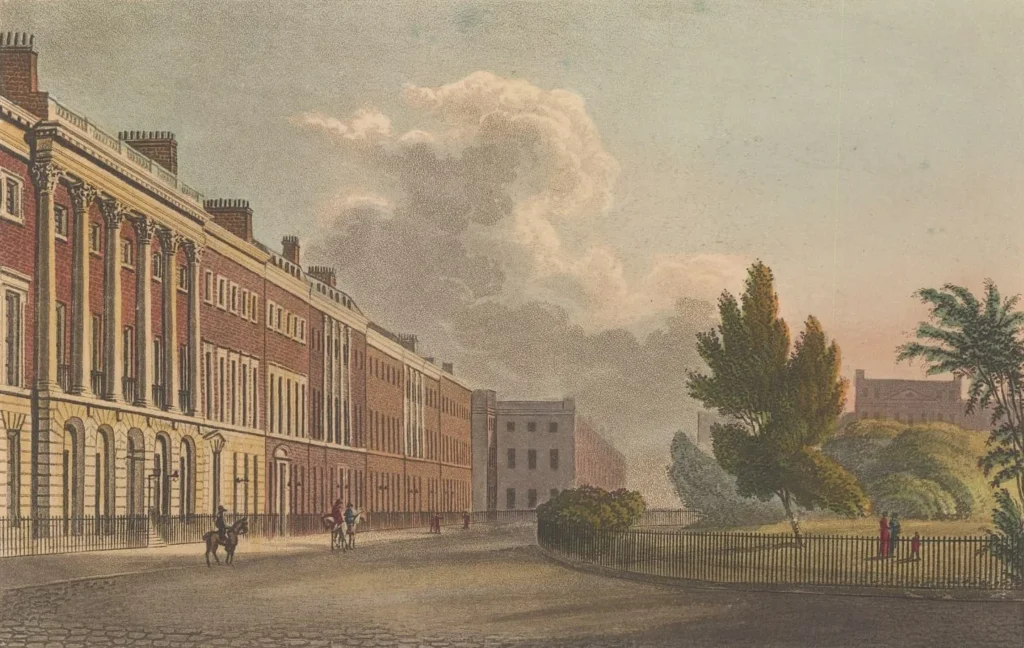
In April 1763, inhabitants of Curzon Street and neighbouring streets petitioned for the fair to be suppressed. They initially failed.
Then the Earl of Coventry moved into his new Piccadilly residence in 1764 and was sufficiently irritated by the noise to help finish the job. Later recollections describe the noise and uproar continuing day and night throughout May, and Coventry eventually campaigned for the fair’s complete abolition.
The fair was not killed because London suddenly discovered morality and stopped enjoying vice. It was killed because the vice had become incompatible with expensive property, and the wrong sort of people had become inconvenient to the right sort of property owners.
Building Mayfair on Top of the Fair
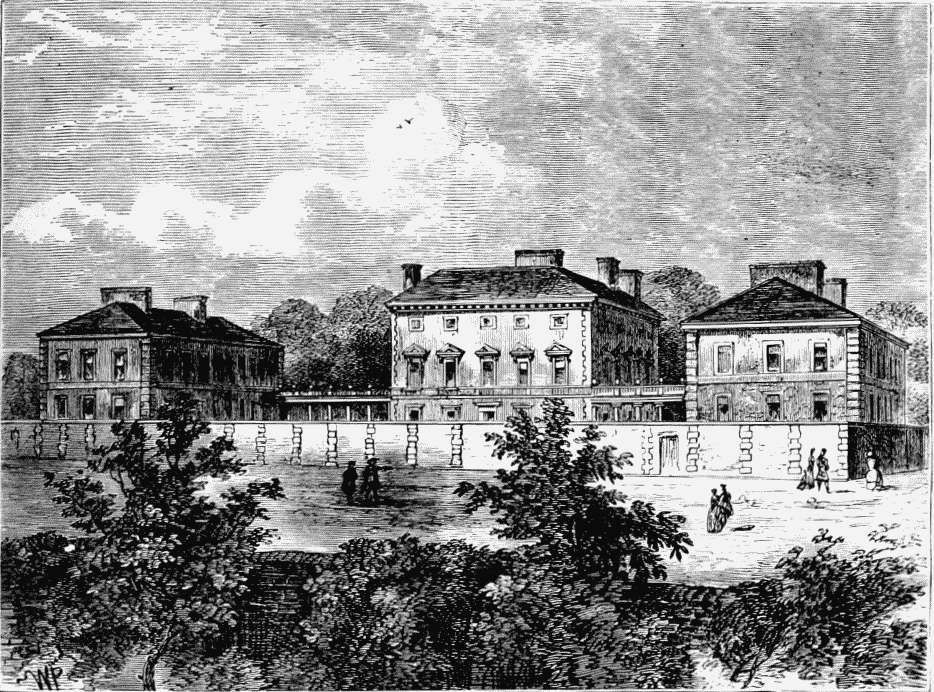
The gradual transformation became particularly significant when the architect Edward Shepherd started developing the site between 1735 and 1746, while the fair was still operating.
Shepherd Market was built directly on ground that had still hosted the annual event. The fashionable development included paved streets, a duck pond, and a two-storey market building with a theatre above it. The market’s ground floor contained shops, while the upper floor could be used for performances.
And the duck pond was not simply an ornamental addition that appeared once the respectable people moved in. It was the same pond associated with the duck-hunting that had taken place during the fair, when the butchers of Shepherd’s Market had used it for their rather less genteel entertainment. The development therefore did not simply erase the old fairground; in places, it incorporated its landscape into the new neighbourhood.
The new Shepherd’s Market and the old fair existed alongside one another for a time, with a fashionable residential district slowly growing around one of London’s most notoriously disreputable annual gatherings.
The area was no longer a simple muddy field outside London where thousands could gather for two weeks of rowdy festivities. It was becoming Mayfair. The aristocracy had not merely driven the fair away. They had built over it.
The Red-Light District That Refused to Behave
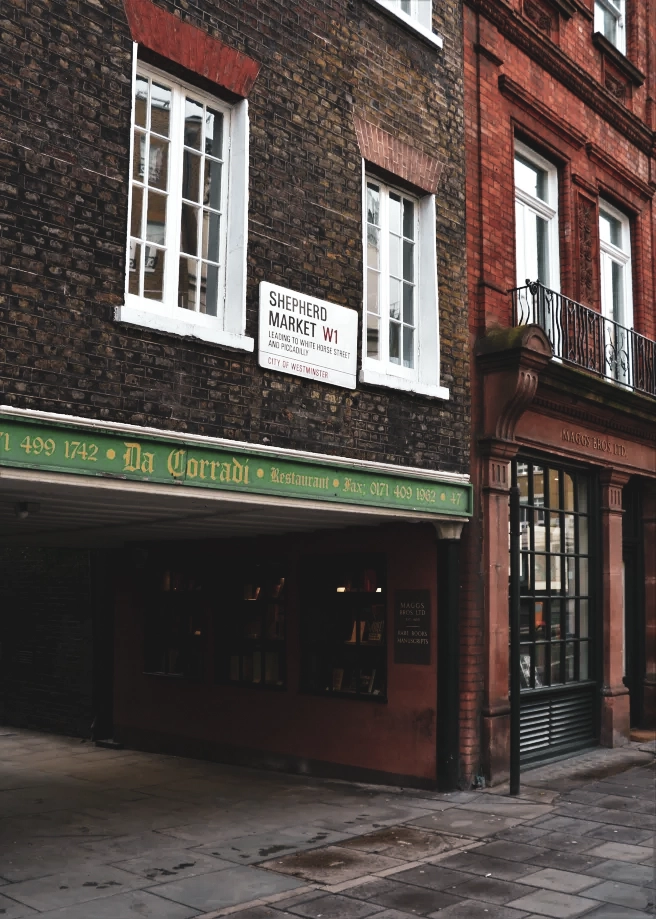
Getting rid of the fair did not, however, magically remove the activities that had made the neighbourhood notorious in the first place. Shepherd Market retained a more complicated reputation than its elegant Mayfair address might suggest. The area continued its association with drinking, entertainment and prostitution, eventually developing a particularly strong reputation for high-class sex work.
The contrast was almost comically appropriate. The same district that was being transformed into one of London’s most expensive residential quarters retained a distinctly disreputable underside.
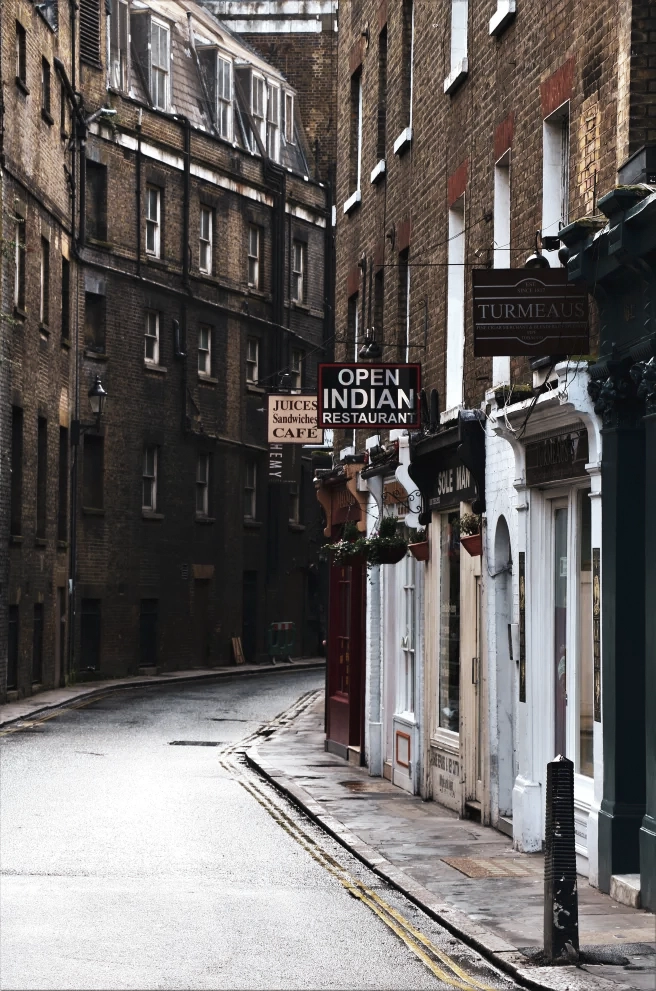
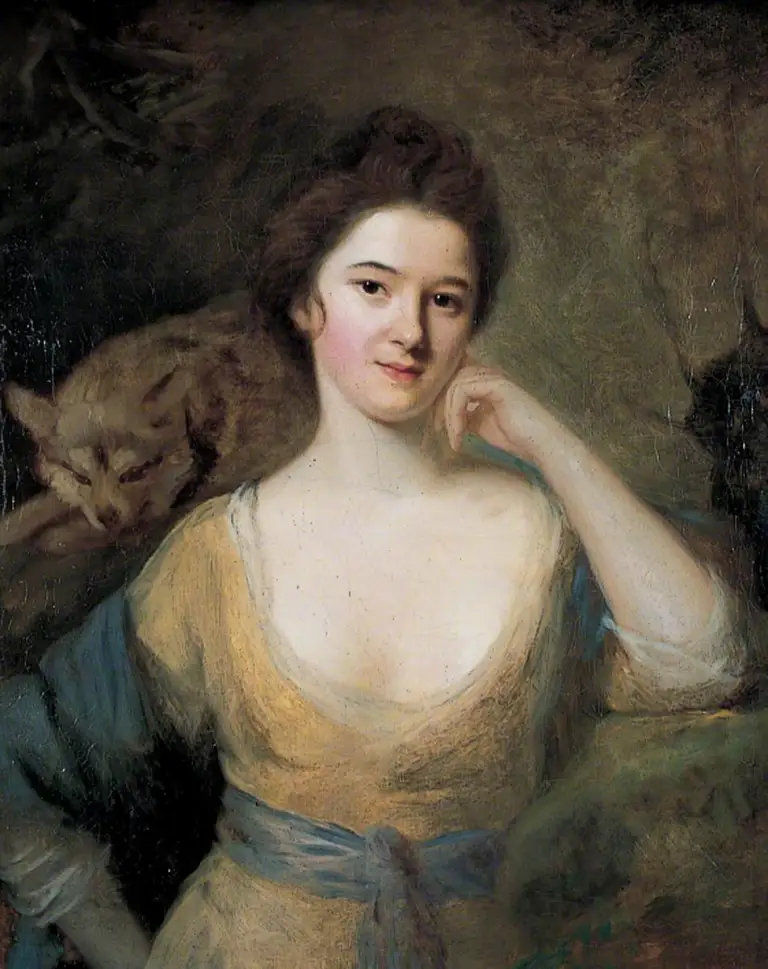
In the eighteenth century, one of its most famous residents was Kitty Fisher, a celebrated courtesan who lived in nearby Carrington Street. Fisher was famous enough to be painted by Sir Joshua Reynolds and notorious enough to inspire endless newspaper and pamphlet coverage. Her presence was hardly accidental. Thanks to the fair, the area had long been accustomed to wealthy men looking for entertainment of a more private variety.
By the nineteenth and twentieth centuries, some of the buildings had changed, but the basic contradiction remained: Shepherd Market could sit in the middle of one of London’s wealthiest neighbourhoods while maintaining a reputation for discreet prostitution. A century of gentrification had apparently achieved many things, but it had not managed to make everybody respectable.
Respectable People, Disreputable Lives
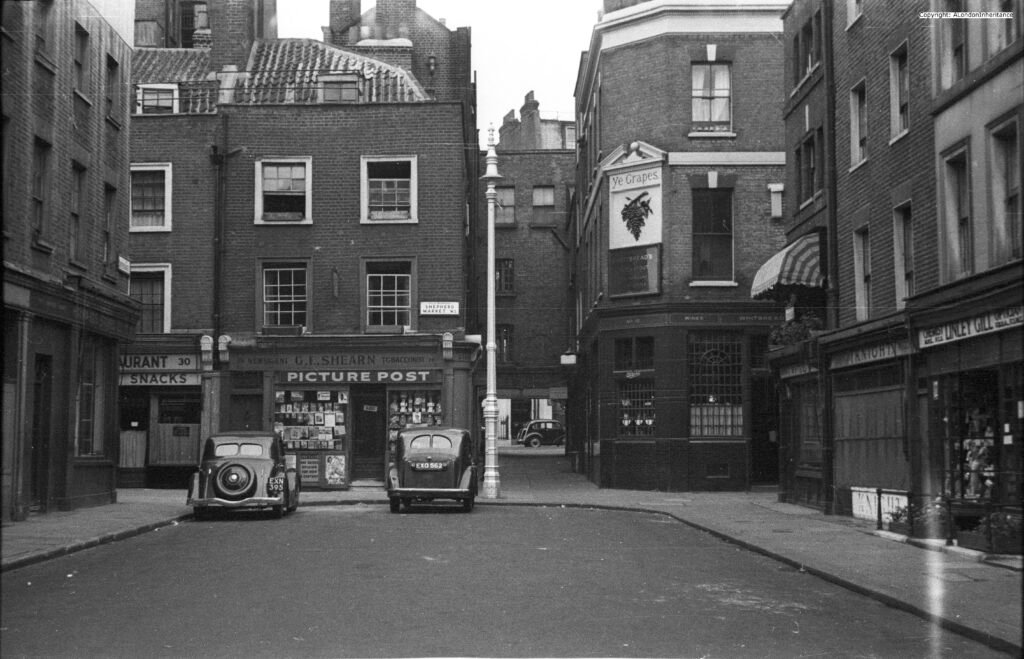
In the 1920s, the area also became associated with writers and artists and was, at that point, rather rundown compared with today’s Mayfair. Michael Arlen lived opposite The Grapes and used the area in The Green Hat. The bohemian residents were drawn to its slightly shabby atmosphere, while the area continued to attract a clientele considerably less interested in literature. Shepherd Market became one of those curious London places where respectable and disreputable lives existed almost on top of one another. Its reputation for upmarket prostitution also survived well into the twentieth century.
In 1959, a debate in Parliament even produced a remarkably specific reference to prostitution in Shepherd Market. A barrister described a woman who worked there from Monday to Friday, four o’clock until nine, with the almost surreal description of “regular trade union hours”. She and her partner lived in a luxurious Kensington flat and drove a Rolls-Royce-Bentley, a gentle reminder that prostitution in Mayfair was not necessarily synonymous with poverty.
The clientele and the surroundings had changed dramatically since the May Fair, but the old relationship between wealth, entertainment and vice remained surprisingly intact.
The £2,000 Scandal
The Shepherd Market story eventually acquired a twentieth-century scandal worthy of the neighbourhood’s older reputation.
In September 1986, prostitute Monica Coghlan met Jeffrey Archer in Shepherd Market, according to her later testimony. Archer, then Deputy Chairman of the Conservative Party, denied having had sex with her. The affair became considerably more complicated when a newspaper learned of the encounter and decided not simply to publish the allegation but to stage a sting.
On 24 October 1986, Archer’s representative Michael Stacpoole was filmed and recorded handing Coghlan £2,000 in £50 notes at Victoria Station. Archer later admitted giving Coghlan money to leave the country and avoid the press, but maintained that it was simply assistance to a woman in difficulty. The Star subsequently published allegations concerning the “pay-off”, which Archer denied.
The subsequent libel case became one of the most sensational British court cases of the decade. Archer won his 1987 libel action against the The Star and received substantial damages after denying the allegations.
But the story did not end there.
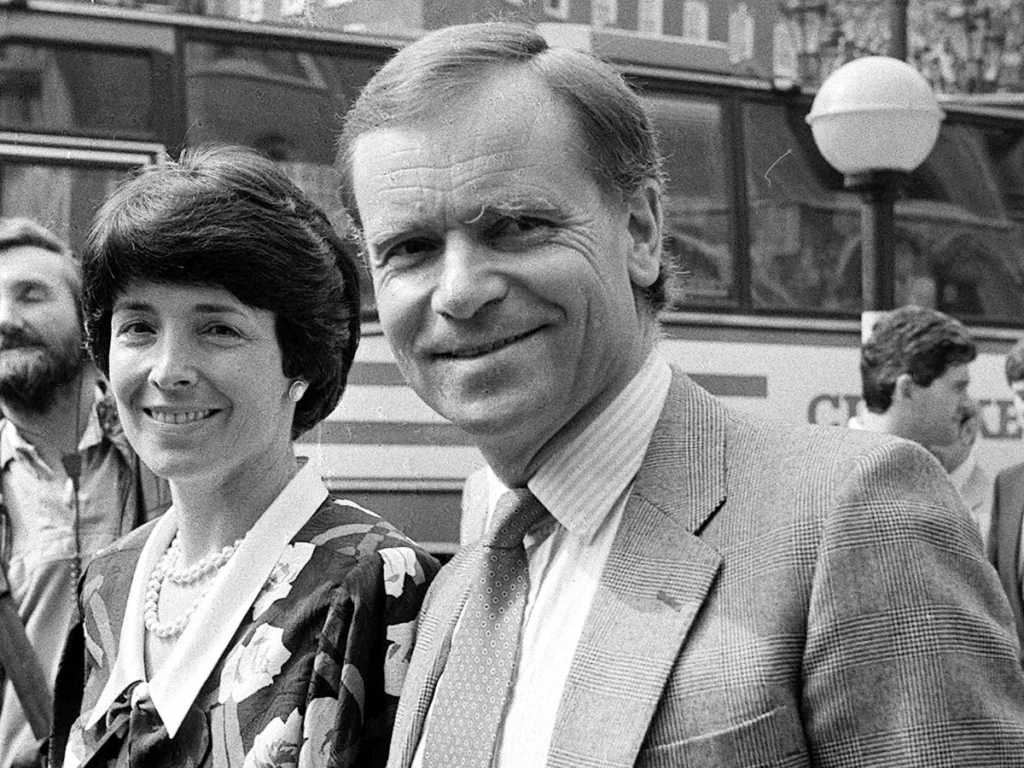
When Archer later became a candidate for Mayor of London in 1999, old witnesses and evidence returned to the surface. The subsequent investigation exposed the false alibis surrounding the original case. Archer was eventually convicted in 2001 of perjury and perverting the course of justice and sentenced to four years in prison.
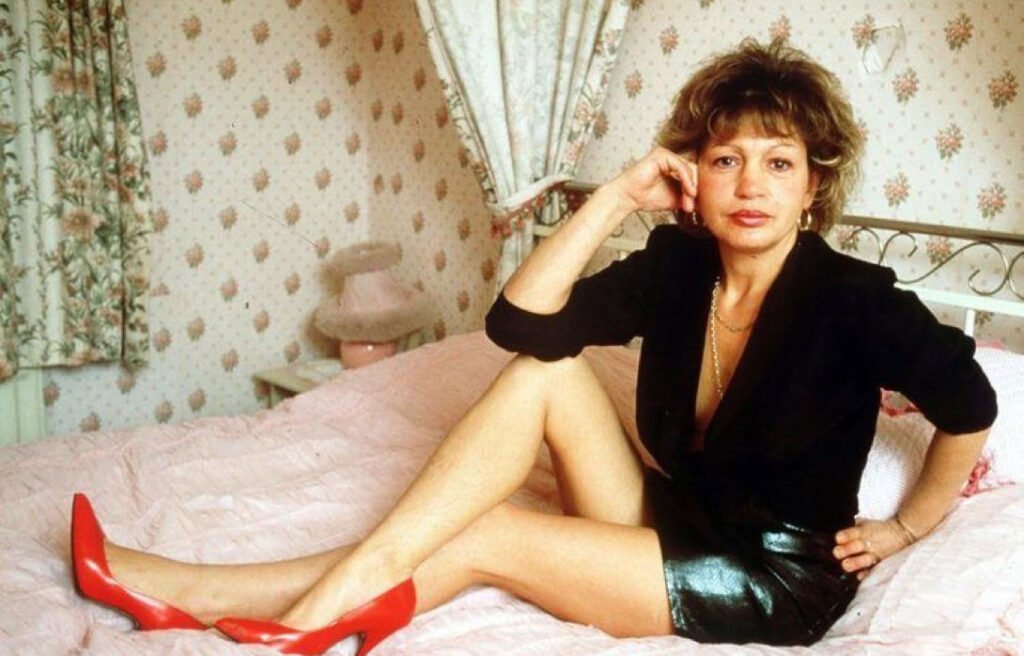
For Monica Coghlan, however, the story had been devastating long before Archer’s conviction. She lost her anonymity and was subjected to intense public scrutiny after the libel case. She continued to work at weekends in Shepherd Market while living in Rochdale, but she was subsequently ostracised by other prostitutes in the area. She died in a car crash in 2001, just as the long-running Archer affair was reaching its legal conclusion.
The £2,000 paid at Victoria Station also left a linguistic souvenir. “An Archer” entered British slang as a term for £2,000, coined from the scandal. It is still recorded in dictionaries and slang references, although it is not anymore a common part of everyday slang in modern London.
From May Fair to Mayfair
Today, Shepherd Market looks almost offensively respectable. The narrow streets are lined with restaurants, bars, shops and expensive properties. The old fair has disappeared, the livestock are long gone, and nobody is likely to mistake the area for an eighteenth-century fairground. Yet the history is still hiding underneath the polished surface.
A constable was murdered during a riot. Thomas Cook was taken to Tyburn and hanged. Tiddy-Doll was accidentally murdered in print. Kitty Fisher lived nearby. And centuries later, another prostitute would meet one of Britain’s most famous politicians on the same streets, setting off a scandal that eventually sent him to prison.
Shepherd Market was therefore never simply the elegant little corner of Mayfair it appears to be today. It was built on top of a fair that London spent decades trying to get rid of.
The aristocracy may have managed to pave over the mud, but they never quite managed to pave over the history. And the wonderfully hypocritical part is that the vice did not disappear.
It simply became more expensive.
Discover more from London Macabre
Subscribe to get the latest posts sent to your email.