
For an aristocratic woman, the London Season was not simply a succession of balls, dinners and fashionable entertainments. It was an annual inspection, a marriage market and, for those who failed to secure a husband, a rather unforgiving countdown. For the gentleman, on the other hand, the London Season was not invented merely so that he could spend several months drinking champagne and exchanging courtesies in increasingly elaborate clothes. In fact, the roots of the phenomenon lay in the country’s political calendar.
From the seventeenth century onwards, members of the British elite, largely connected with either the House of Lords or the House of Commons, regularly descended upon London when Parliament was sitting. As the hunting season drew to a close, they brought their families with them from their remote country estates. By the eighteenth century, the arrangement had become one of the defining rituals of upper-class life: politics and declining pheasant numbers brought the men to London, while the women who accompanied them ensured that nobody had to endure their presence without sufficient entertainment and intrigue.
The Social Machinery
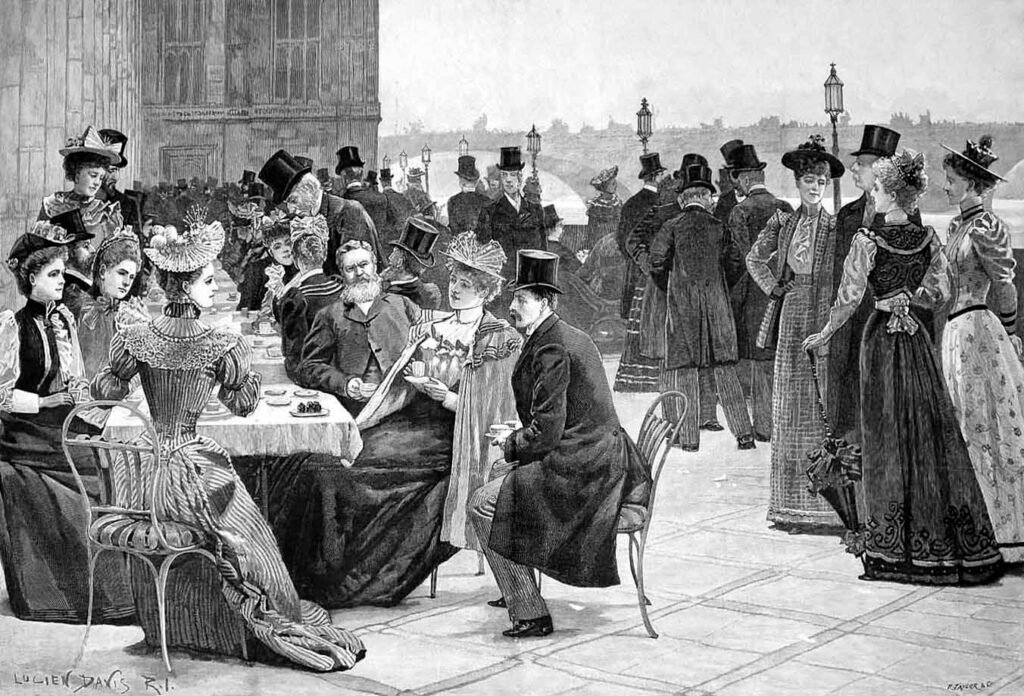
At the beginning of February each year, the monarch ceremonially opened the first session of Parliament, helping to establish the familiar spring and summer rhythm of the main Season. The most exclusive entertainments took place not in public halls but within the enormous London houses of the aristocracy, where dinners, receptions, balls and musical evenings could be staged without the vulgar inconvenience of admitting everyone.
By the Victorian and Edwardian periods, however, the London Season had grown into something far larger than a collection of private parties held around the parliamentary calendar. It was a vast social machine involving balls, dinners, concerts, exhibitions, court presentations, races, garden parties, sporting events and an almost pathological amount of visiting. Contemporary statistics showing enormous fluctuations in London’s population throughout the year seem to confirm just how extensive it had become.
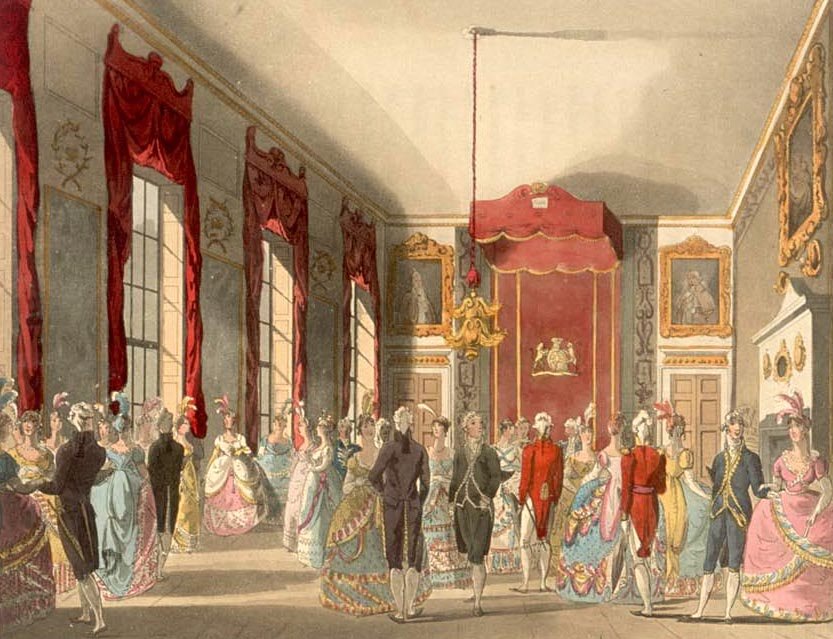
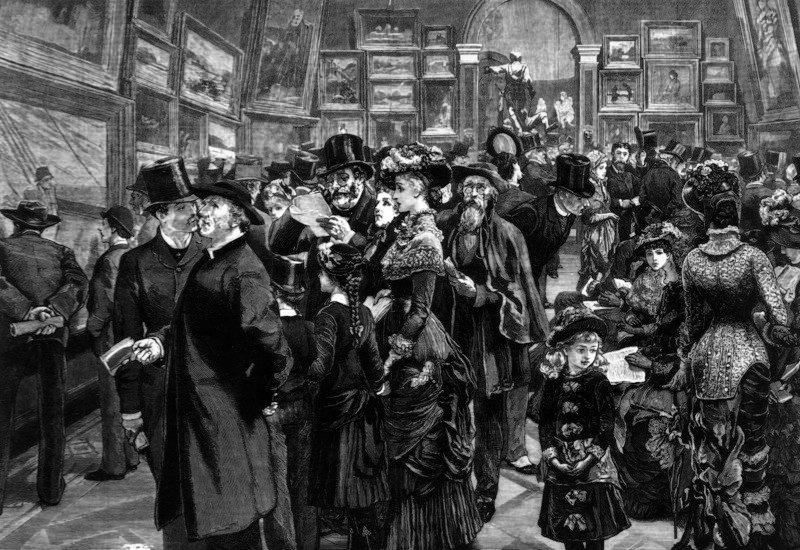
Alongside the private entertainments came a growing calendar of public events, exclusive enough to preserve the social hierarchy but spectacular enough to attract an audience. The traditional signal that the Season had begun was the opening of the annual exhibition at the Royal Academy of Arts. One of the most important annual court events was Queen Charlotte’s Ball, first organised by King George III in 1780 in honour of his wife.
June brought the great sporting events: the Epsom Derby and the week of racing at Ascot. In July came the great cricket fixtures: the House of Lords against the House of Commons, Oxford against Cambridge, and Eton against Harrow. The summer culminated in the rowing races of the Henley Royal Regatta, tennis matches at Wimbledon and the sailing races of Cowes Week.
The Little Season
There was also a smaller winter social period, sometimes known as the Little Season. Once the main festivities ended in August and the great country houses filled with hunters, those who remained in London continued to entertain one another. Landless lawyers, diplomats, politicians, writers and other aspiring members of fashionable society filled the gap. For ambitious young people, these quieter months could be almost as important as the main Season: the right introduction, the right patron or the right friendship might determine whether they were welcomed into society once the great aristocratic migration began the following February. The success or failure of these winter endeavours could determine the course of their entire subsequent careers.
But for women, beneath all the silk, flowers and chandeliers lay another purpose entirely.
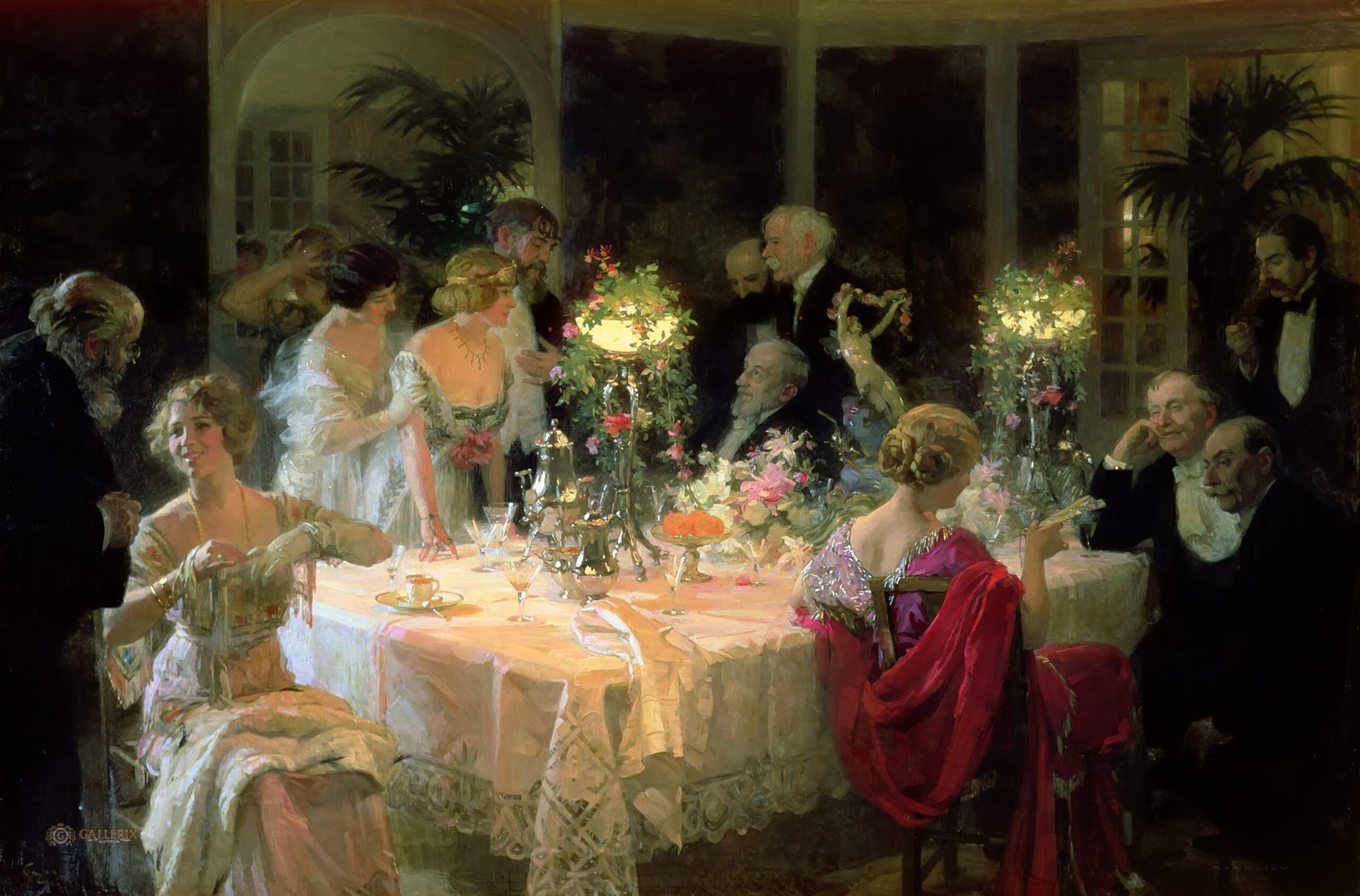
A Marriage Market
By the Edwardian era, the London Season had become a major preoccupation of the British upper classes, and perhaps nowhere were its stakes higher than among titled young women. For mothers, London’s fashionable balls provided an excellent opportunity to arrange advantageous marriages for their children.
For the young men, Season represented an opportunity to make connections, build political and social networks and, eventually, choose a wife. For their sisters, the prospects were considerably more immediate. For six months, London was packed not only with the most prominent and wealthy Britons, but also with newly rich Americans, millionaires from Britain’s colonies around the world, and aristocrats and courtiers from across Europe. For a girl whose future depended upon making the right impression, there was very little room for failure.
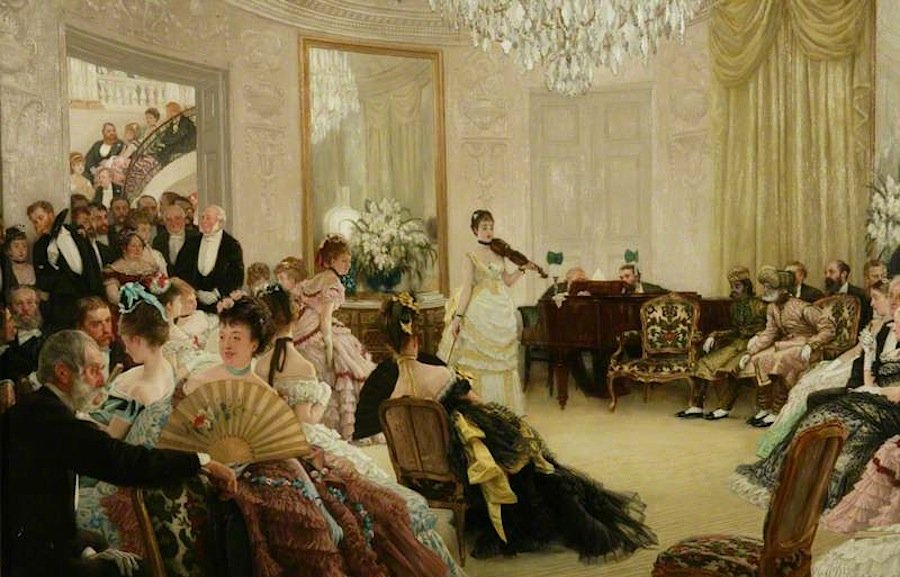
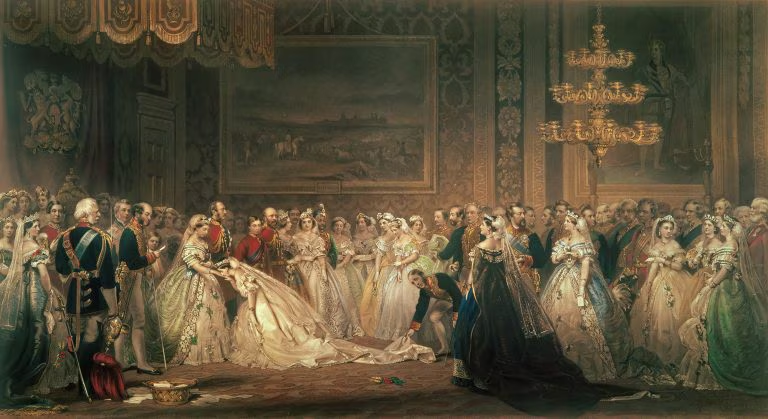
A young woman of around seventeen or eighteen could be formally presented at court to the monarch and thereby launched into fashionable society. The presentation marked the transition from girlhood into adulthood – and for some, the transformation was almost brutally sudden. Violet Asquith, later Lady Violet Bonham-Carter, was herself presented at court in 1905. Looking back on her first Season, she recalled: “Eager as I was to be grown up, I found the rite bewildering and painful.”
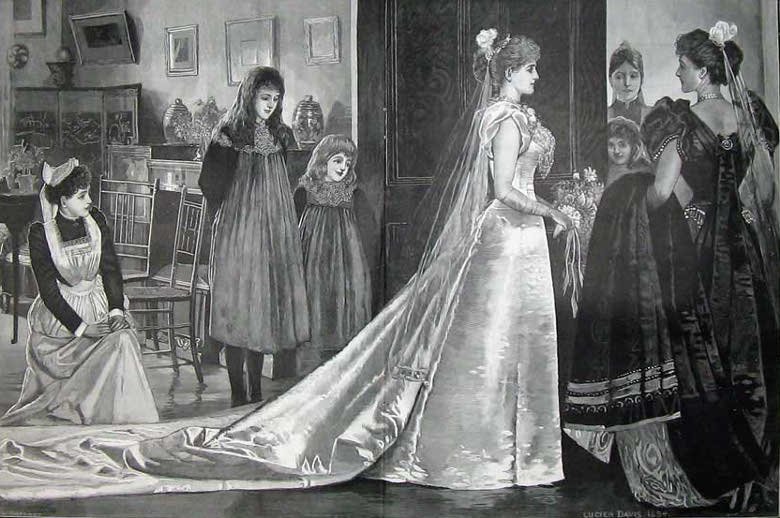
Her hair, which she had previously worn loose down her back, was put up for the first time. She was laced into a white satin Worth dress, left “rather breathless and a little cold”, and sent downstairs to face forty dinner guests, most of whom she had never met. The twenty young men, she recalled, were dressed “like waiters (only a little better)”. The transformation from girl to debutante had taken an evening.
The girl was then expected to spend the Season appearing in the right places, meeting the right people and, preferably, attracting the attention of the right man. Her success was not measured by how much fun she had. A successful Season might end with an engagement. Failure meant returning the following year and trying again.
This was not an official cattle market, of course. The women were not lined up in pens with their family fortunes written on labels. However, they were dressed, introduced, observed, discussed, compared and assessed by an entire society in which marriage could determine their security, status and influence for the rest of their lives. The distinction is mostly grammatical.
The Vanity Fair
The presentation itself was governed by rules of rank and pedigree. A girl needed to be presented by a sufficiently respectable woman, usually a female relative, patroness or friend of higher social standing. The pool of acceptable families was broader than the aristocracy alone and could include daughters of senior military officers, naval officers, eminent physicians, senior clergy and prominent lawyers. What mattered was not merely the girl’s appearance, but whether her family possessed sufficient money, connections and social respectability to make her an acceptable addition to the fashionable world – and, by extension, an acceptable wife.
Ellen Palmer’s diary offers a rather detailed account of the Season’s matchmaking. She entered society in 1847 at seventeen, wealthy, beautiful and expected by her family to make a socially advantageous marriage. However, after a scandalous encounter with a duplicitous Swedish count, her prospects suddenly plummeted. Five London Seasons passed without producing a suitable husband. By her sixth, matchmaking had become almost an administrative task. Lady Tankerville was actively considering what sort of man might suit her and began pressing Ellen towards one prospective match. Ellen’s opinion of him was considerably less enthusiastic. She thought him fat and recorded that the very idea of marrying him made her feel sick.
Ellen’s resolve shows her defying nature in a world where a girl who failed to find a husband after two or three Seasons could begin to attract pity, gossip or ridicule, while an unmarried woman approaching her late twenties could increasingly be regarded as having missed her opportunity for good. There was no official expiry date stamped on a debutante’s forehead. There did not need to be. After enough Seasons, the invitations, introductions and polite enquiries began to carry their own message: time was running out. The struggles and intrigues of young women on the marriage market were repeatedly portrayed and mocked in the literature of the period, including in William Makepeace Thackeray’s novel Vanity Fair.
165 Invitations
After being presented at court, debutantes entered six months of almost relentless social activity, all in the hope of attracting the attention of a suitable husband. The sheer amount of social activity expected of a young woman was astonishing. Lady Dorothy Neville famously recalled that during her first Season she attended 50 balls, 60 parties, 30 dinners and 25 breakfasts. That amounts to 165 separate social engagements before we even begin counting the other obligations expected of a young woman hoping to secure a good match.
A Season day could begin before most sensible people had even considered getting out of bed. Young women rode in Hyde Park, particularly along Rotten Row, where being seen was almost as important as being able to remain upright on a horse. Women learnt to ride from childhood, eventually becoming experts at remaining in the saddle while simultaneously offering their hands to the numerous acquaintances they encountered.
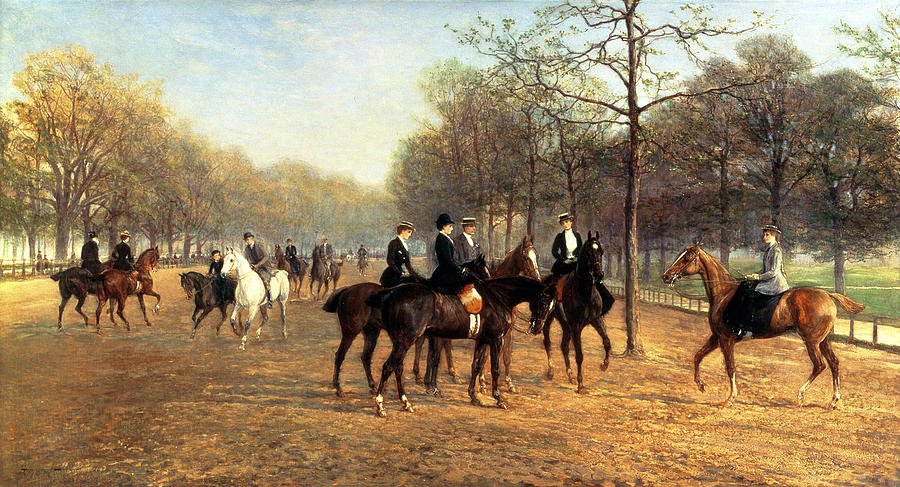
After Hyde Park came an elaborate breakfast and the newspapers. During the Victorian era, The Morning Post published a column listing the important social events scheduled for the day, allowing ladies to study the calendar and decide where they needed to be seen. Then came shopping, most often on Piccadilly or at Covent Garden.
Every Sunday after morning church services, the elite would flock to Hyde Park for the Church Parade – a promenade where it was essential to be seen wearing the latest fashions. The summer months were also filled with garden parties, held among other places in the royal gardens of Buckingham Palace and in pavilions along the Thames. The riverside around what is now Chiswick was particularly fashionable; on the surrounding estates belonging to the Duke of Devonshire, an average of two invitation-only breakfasts were held each week.
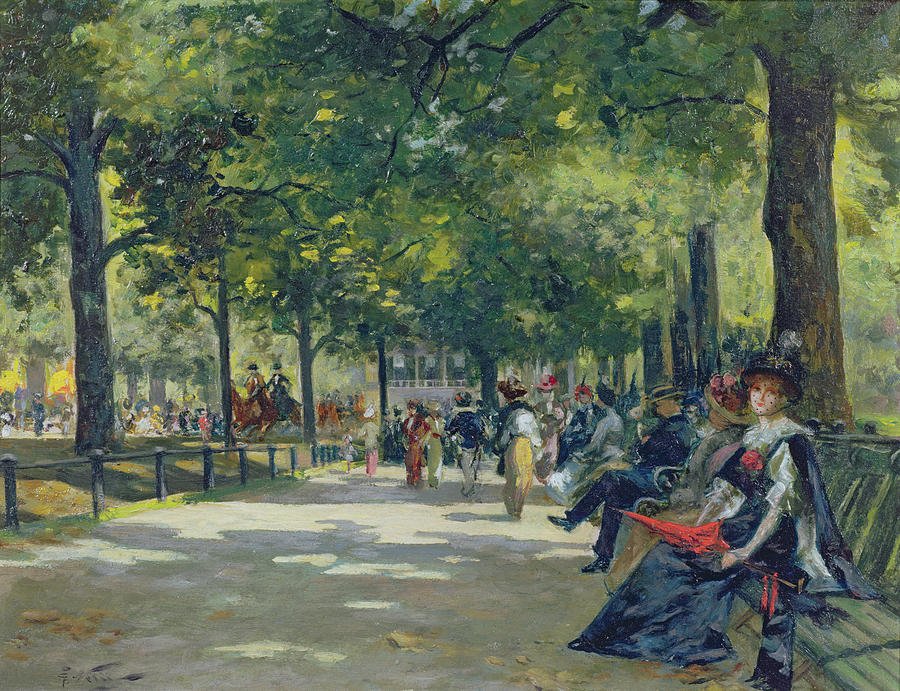
Even visiting people had its own timetable. Morning calls were reserved for very close friends and family members, while more distant acquaintances and callers had to wait until the official visiting hours in the afternoon. According to the rules of savoir-vivre, such visits were not supposed to last more than 30 minutes. After lunch, the ladies opened their salons and received these formal visitors. Dinner was served around six or seven, after which society either went to the opera or remained at home entertaining guests to the accompaniment of music.
At ten o’clock, lavish balls began. The orchestra opened the evening with slower waltzes, followed at regular intervals by more energetic quadrilles. The pieces were arranged in advance and listed in the programme distributed to guests. Dancing brought its own set of rules, since partners had to be formally requested and the programme arranged in advance.
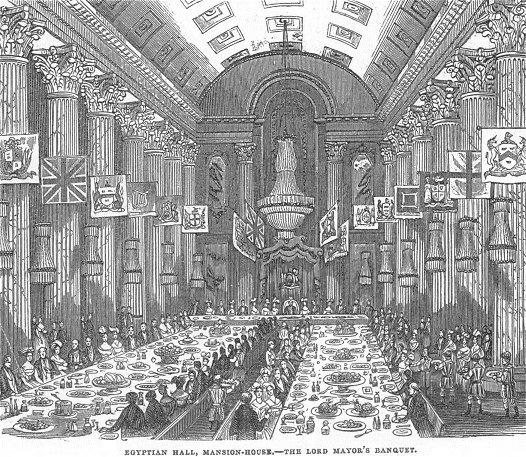
A gentleman could therefore be introduced to a lady solely for the purpose of dancing a particular piece. The rules of good manners, however, did not allow him to continue the acquaintance beyond that encounter. The dancing could continue until three in the morning. Then came the small matter of sleeping. The next morning, the only acceptable response was to wake up early and do it all again.
The social calendar was a carefully choreographed performance. Women were expected to know when to visit, whom to visit, how long to stay and what to wear. Clothing changed with the hour, because one dress was not enough to demonstrate that one belonged to the right social class. The men had their own obligations, naturally, but they also had Parliament, clubs, politics, business and the reassuring freedom to spend much of the evening smoking, drinking and discussing matters of national importance. Meanwhile, the women had to make sure everybody noticed their new dress and remembered it. The object was not simply to enjoy the Season, but to survive it without ever becoming invisible.
Dressed for Inspection
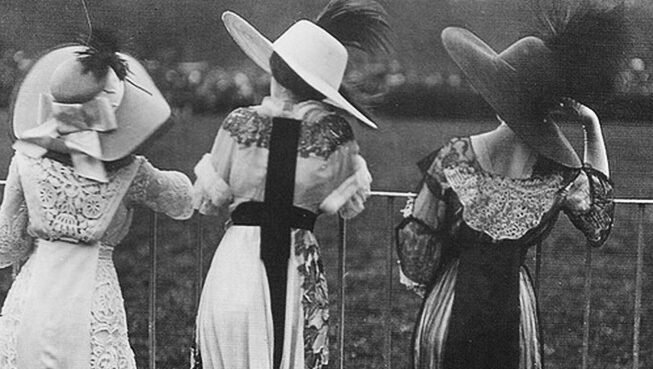
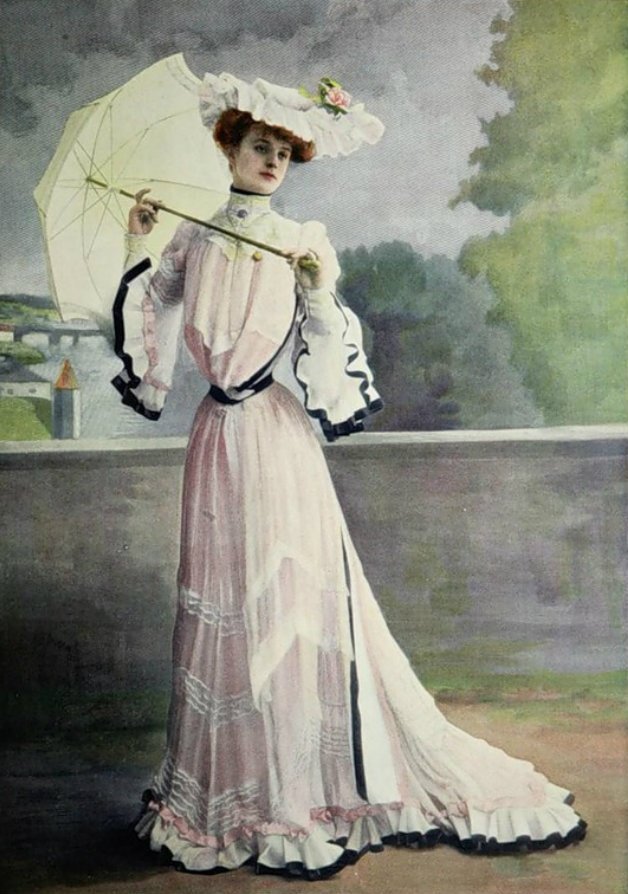
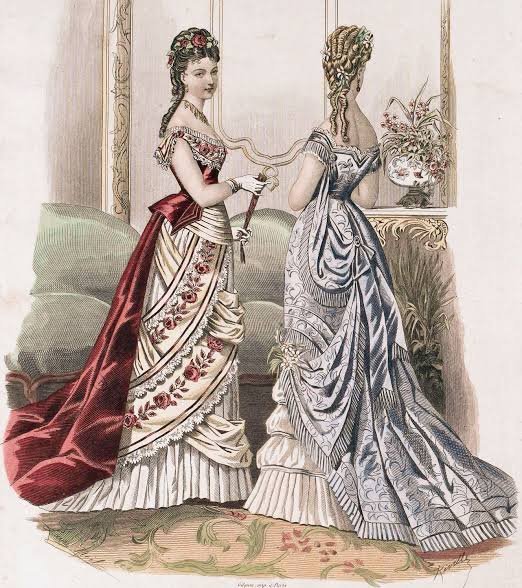
The fashionable woman taking part in the London Season did not simply put on a dress. She was constructed. The silhouette changed constantly, and keeping up with fashion required money, servants, dressmakers and an almost supernatural tolerance for discomfort. The corset tightened the waist and altered the body’s shape, while crinolines and later bustles manipulated the volume of the skirt. The process of dressing required constant assistance, leaving much of the work to the largely invisible army of maids who fastened hooks, tightened laces, arranged layers and made sure their mistress emerged looking as though she had achieved the whole effect effortlessly.
And one dress was certainly not enough. Victorian etiquette divided the day into its own little hierarchy of clothing. A lady might wear a relatively simple morning dress for private business and calls, change into something more elaborate for an afternoon reception or garden party, and reserve her finest gown for dinner, the theatre or a ball. Certain fabrics and ornaments were considered too formal for particular hours, while elaborate jewellery was generally saved for the evening.
Fashion was not about looking beautiful. It was about demonstrating that one understood precisely what was appropriate. The same woman could be perfectly respectably dressed at ten in the morning and embarrassingly, socially, catastrophically dressed by four.
This created an absurd logistical problem. A woman could spend only a few hours in one outfit before etiquette demanded another, while every change involved considerably more than pulling a new frock over her head. The maid who dressed her mistress was consequently required to understand not only how the clothes fitted together, but also which dress, fabric, colour and accessories belonged to each occasion.
The Season’s Casualties
There was another problem: fashion moved faster than a dressmaker’s needle. Elaborate gowns could require considerable amounts of skilled manual work, meaning that fashionable women and their families had to commission clothes sufficiently early for them to be completed in time for the Season.
Yet ordering too far in advance carried its own risk. A gown that was perfectly on trend when ordered could look hopelessly behind the times by the moment it finally appeared at a ball. The lady therefore lived in an awkward state of anticipation, trying to predict what everyone else would be wearing before everyone else had decided what to wear. Every dress was an investment in being seen, and every outdated dress was evidence that the investment was failing.
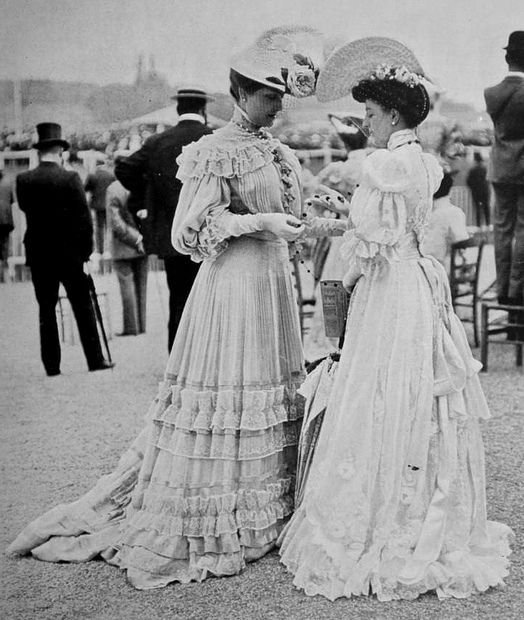
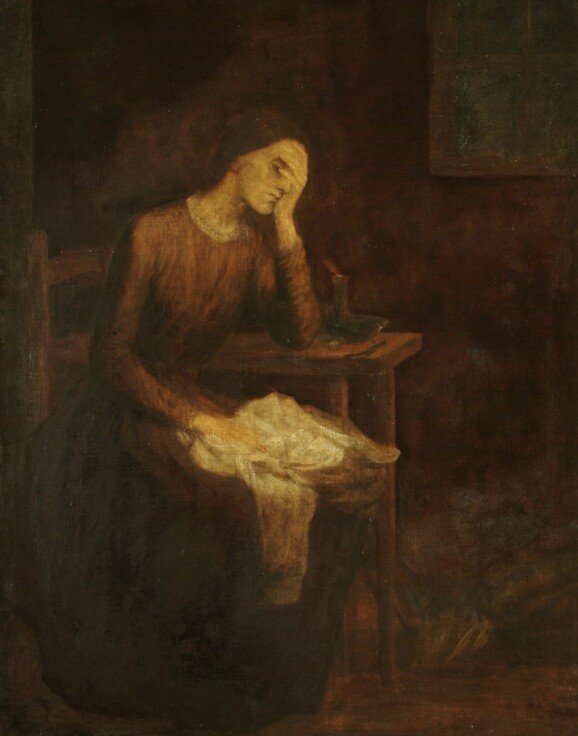
For the wealthy, this was solved with money. Multiple gowns could be ordered, altered, replaced and supplemented with new accessories as the season progressed. For the women making them, however, fashionable appearance meant weeks of cutting, sewing and fitting by hand. The finished gown might be admired for a few hours before being relegated to the wardrobe by the next change in fashion. Somewhere beneath the glitter of the Season was an enormous amount of low paid female labour, performed by women whose names never made it onto any guest list.
In his 1842 account of dressmakers’ assistants workload during the London Season, James Grant describes young dressmakers working through the night to complete ball dresses. In one instance, they were working through three days and two nights of almost continuous sewing. Workers who fainted at their chairs were given strong green tea and stimulants and sent back to work because the dresses had to be finished.
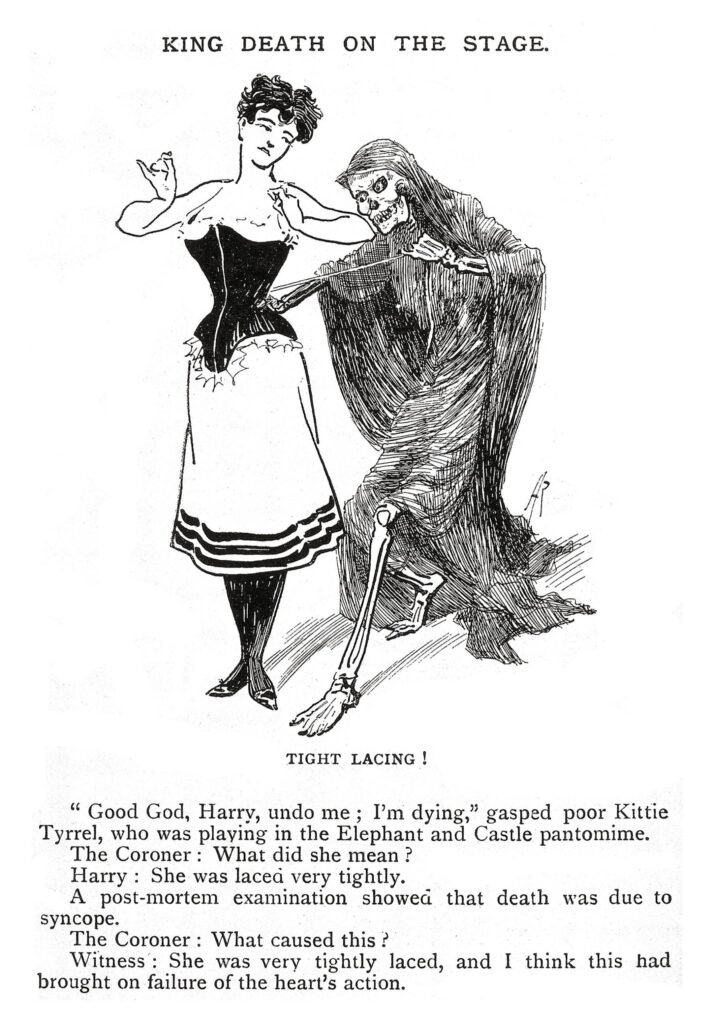
Tight-lacing also became a subject of medical criticism. Contemporary doctors and later historians have documented concerns about restricted breathing and other physical effects, although the popular image of every Victorian woman routinely crushing her internal organs into submission is rather more dramatic than the evidence allows. But there were genuine dangers, and occasionally the corpse was still wearing the dress.
In 1894, London actress Kitty Tyrrell collapsed after performing at the Elephant and Castle Theatre. At the subsequent inquest, medical opinion linked the pressure of her corset to her underlying heart condition. Her case offers a rather less glamorous version of fashionable femininity: there was nothing romantic about struggling for breath backstage while still wearing the clothing that society demanded.
The Fashionable Face
Even the face was another piece of the construction. Cosmetics, powders, dyes and beauty preparations promised to preserve the flawless complexion, while some contained ingredients that were far less hazardous than their advertisements suggested.
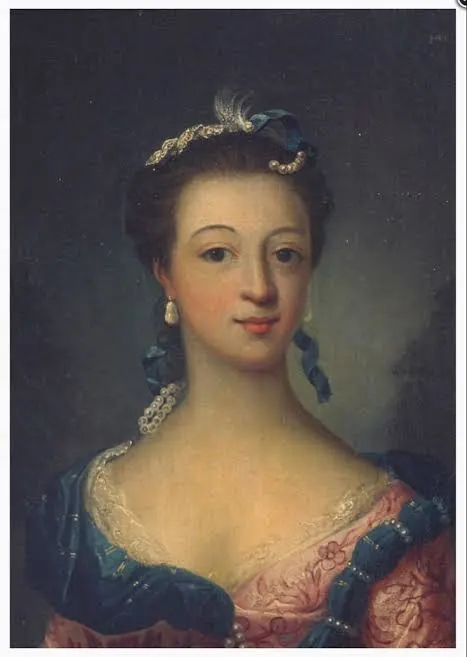
In the eighteenth century, pale skin was highly desirable among fashionable women, partly because it suggested that its owner had never been forced to spend her life working outdoors. One of the substances used to achieve the fashionable white complexion was ceruse, a lead-based cosmetic. White lead, mercury, arsenic and other questionable substances appeared in many historical cosmetics, but against the common belief, the dangers were not entirely unknown to contemporary users.
One of the most famous victims associated with this poisonous pursuit of beauty was Maria Gunning, Countess of Coventry. Maria was celebrated as one of the great beauties of eighteenth-century London society. She continued using white lead cosmetics despite the damage they caused to her skin, and died in 1760 aged only 27.
Contemporary and later accounts attributed her declining health and death to her use of white lead, although the exact medical cause cannot be established with modern certainty. Her appearance remained so important to her that, according to the historical accounts, even during her final illness she took considerable care to conceal the ravages of disease from visitors. There is something almost perfectly Georgian about it. The beauty had to remain beautiful even while dying.
Almack’s Judgment
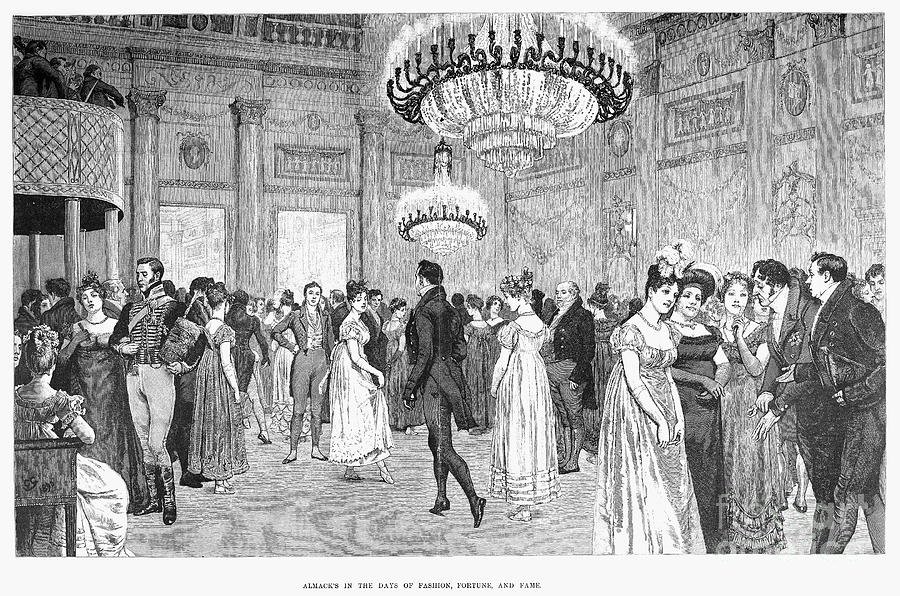
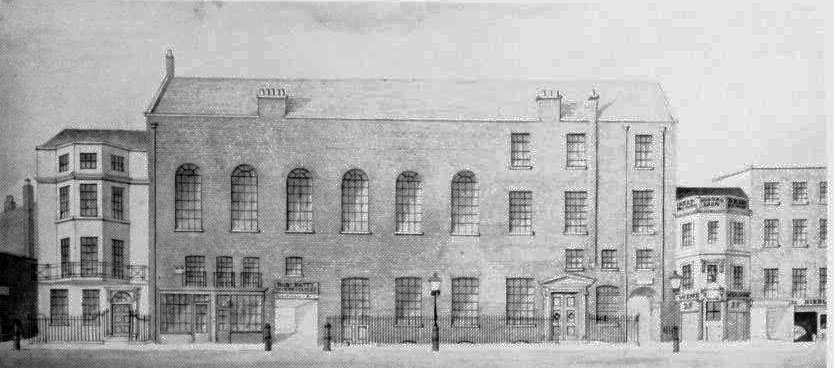
If the Season was a marketplace, Almack’s was one of its most unpleasant little gates. Almack’s Assembly Rooms at St James’s became one of the most exclusive institutions in fashionable London. Admission was controlled by a group of aristocratic women known as the Lady Patronesses, who decided who was sufficiently respectable to attend. Money alone was not enough to enter, and neither was the title. A socially fashionable woman could be expelled just as a duke could be refused entry.
A person who lost their Almack’s voucher could find themselves suddenly excluded from one of the most important social institutions in London. The Patronesses met regularly to decide who should be admitted, rejected or removed, and exclusion could amount to a genuine social disaster.
For women, however, the scrutiny extended far beyond the Almack’s ballroom. Their appearance, manners, companions, romantic prospects and behaviour could all become subjects of gossip. Society papers and newspapers increasingly transformed fashionable life into a form of public entertainment, reporting marriages, scandals, romances and social triumphs. There was no need for a supernatural demon to haunt the ballroom, because there was always the gossip column.
Beautiful, Rich and Ruined
As the nineteenth century progressed, the marriage market became particularly strange. British aristocratic families with titles, estates and centuries of pedigree increasingly faced the unpleasant problem of maintaining their enormous lifestyles with considerably less enormous incomes. The result was one of the more spectacular developments in the social history of the period – the arrival of the American heiress.
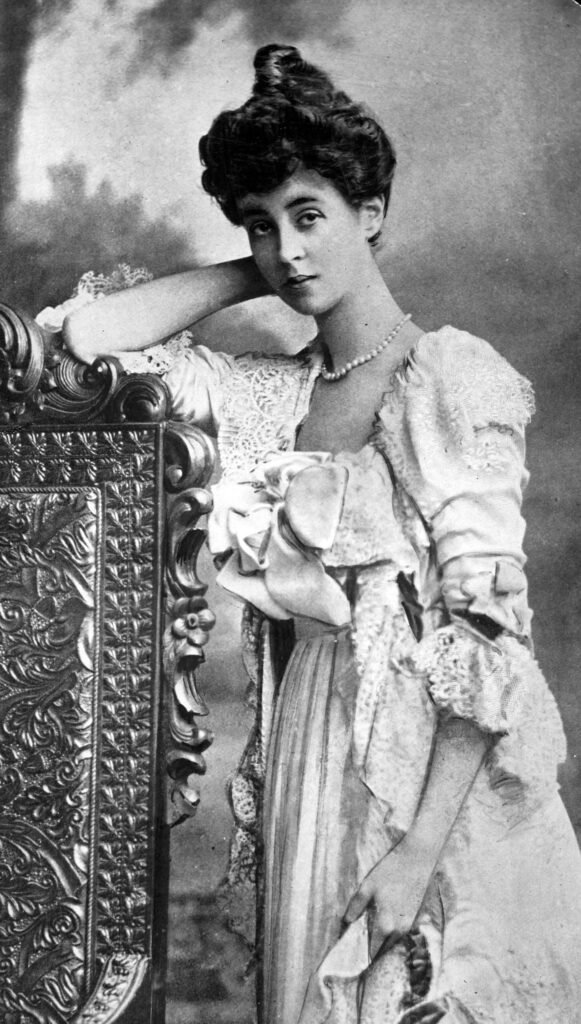
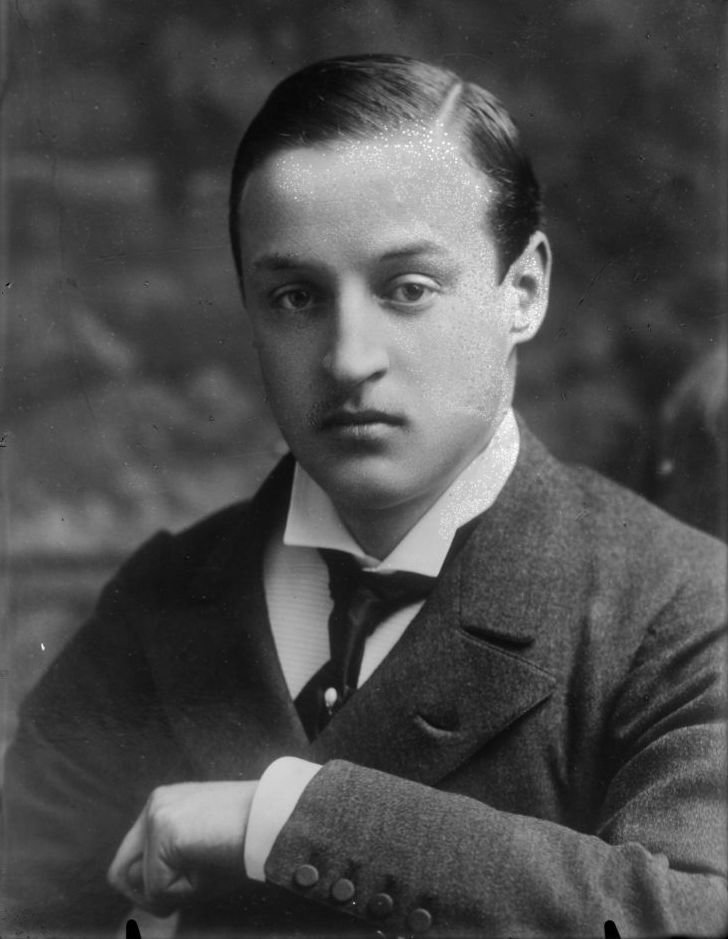
Across the Atlantic, wealthy American families possessed something Britain could no longer manufacture quite so easily: vast quantities of new money. Between 1870 and 1914, more than 100 “Dollar Princesses” married into the British aristocracy making their way into the peerage and bringing new fortunes into the country. One of the most famous examples was Consuelo Vanderbilt, who married the 9th Duke of Marlborough. Her enormous dowry helped rescue the heavily indebted Blenheim estate.
But the arrival of American heiresses created its own hierarchy of resentment. Old families sneered at new money while quietly accepting it. Aristocratic men who would never have tolerated a business partner with a dollar fortune, could suddenly become remarkably flexible when the fortune belonged to a beautiful young woman. The language of romance could conceal an extraordinarily practical transaction. The money bought estates and the titles bought status. Young women were simply expected to make the exchange more palatable for everyone involved.
The Last Debutantes
The world that produced the traditional Season began to unravel after the First World War. Many aristocratic families could no longer afford their enormous London houses. The old pattern of maintaining a country estate, a London mansion and an army of servants became increasingly difficult to sustain. More events moved into public venues, making society less dependent on private aristocratic houses and therefore less exclusive. The Second World War only accelerated the process.
By the 1930s, the old Season was already beginning to look like a relic. Yet some families continued to perform it with spectacular enthusiasm. The lavish coming-out party held for 17-year-old Lady Sarah Spencer-Churchill at Blenheim Palace in July 1939 has sometimes been described as the last great Season event, taking place less than two months before Britain entered the Second World War. It is difficult to imagine a better closing scene for the old aristocratic world: thousands of pounds spent creating one final display of splendour while Europe was already sliding towards catastrophe.
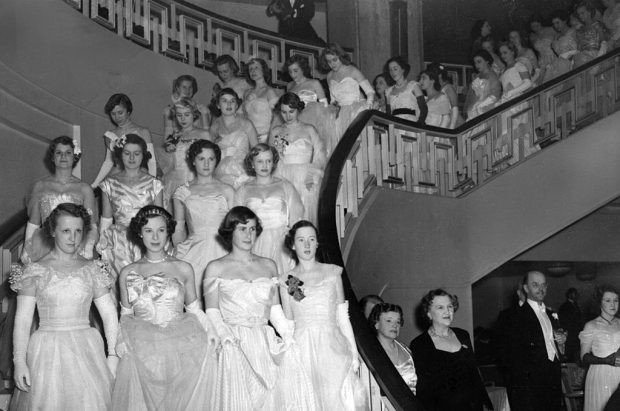
By the end of the Second World War, most of the British elite had either moved to the United States or retreated to their country estates. The formal presentation of debutantes at court survived considerably longer. Queen Elizabeth II ended the practice in 1958, when the last debutantes were presented at the Court of St James’s. The ceremony had survived wars, political upheaval and the gradual dismantling of the old aristocratic order, but by the 1950s it increasingly appeared absurdly out of step with the lives of young British women. And perhaps that was ultimately what killed it.
Women were beginning to have somewhere else to go. They chose university, professional careers, politics or simply independent lives. The Season had once offered a young woman a narrow path from daughter to wife, and from wife to society hostess. By the middle of the twentieth century, that path was no longer the only road available.
The ballroom did not collapse, the chandeliers, dresses and titles remained too, but the girl standing underneath them was no longer necessarily waiting for a husband to decide what happened next. And that may be the most satisfying death suffered by the London Season. It was not murdered, it was simply walked away from.
Discover more from London Macabre
Subscribe to get the latest posts sent to your email.